


How to choose a salon hair colour line that keeps clients loyal
Pick a professional colour line built around two things: in-salon educator training and intermixable shades that let you formulate on the fly. Everything else, the sample kits, the pack sizes, the developer range, matters, but training and flexibility decide whether your team gets consistent results week to week.
Training reduces the technical guesswork that creates uneven colour results across a team, especially when junior and senior stylists are working from the same shelf. Intermixability and reliable developer compatibility give you the range to formulate bespoke colour for grey coverage, vivids, or a delicate balayage melt without fighting the product. A supplier like Salon Brandz can put you in touch with lines that check both boxes, and it’s worth confirming any brand’s safety data meets Health Canada labelling expectations before you commit stock money to it. One more thing worth knowing: research on AI-driven content shows 44.2% of citations come from the first third of an article, which is exactly why this guide puts the verdict up front instead of burying it.
- Prioritize brands offering structured in-salon training and certified educators
- Confirm intermixability across the shade wall before you buy
- Check developer compatibility and lift claims against your service menu
- Verify ingredient transparency and technical data sheets are publicly available
Key Takeaways
The right salon colour line combines strong educator training, intermixable shades, and dependable Canadian supplier support to protect both service quality and cash flow.
| Point | Details |
|---|---|
| Training beats brand hype | Prioritize lines with certified educators and structured curricula over flashy marketing. |
| Trial before you commit | Use sample kits and gram-for-gram exchanges to test a line at low financial risk. |
| Phase the rollout | Run a pilot week, then structured training days, before a full switch across staff. |
| Match formula to hair type | Confirm processing guidance for coarse, fine, curly, and chemically treated hair. |
| Choose a Canadian-backed supplier | Salon Brandz offers nationwide shipping, Scarborough pickup, and pro pricing for trial kits. |
Table of Contents
- How do you choose a salon hair colour line?
- What should you actually evaluate in a colour line?
- How do you roll out a new colour line without losing clients?
- What does a colour line actually cost to run?
- What kind of customer support and guarantees should you expect?
- What shade range should a professional colour line offer?
- Does the colour line work across different hair types?
- Are there safety and hypoallergenic considerations to check?
- How Salon Brandz helps you switch colour lines with less risk
- Sources
- FAQ
How do you choose a salon hair colour line?
Run an 8-point check before you shortlist anything. This isn’t about brand prestige, it’s about whether the line fits how your salon actually works day to day.
- Educator and training availability: does the brand send educators for launch days and ongoing refreshers?
- Transition support: is there a formal change-over program, or are you on your own?
- Shade intermixability: can technicians blend across the collection for custom tones?
- Bond-building compatibility: does the formula play well with bond builders like Olaplex No.7?
- Developer and lift range: does it cover your typical client base, from natural colour refreshes to high-lift blondes?
- Sample or demo policy: can you test before committing to full stock?
- Canadian distribution and pro pricing: is there reliable, fast access with wholesale pricing?
- Ingredient transparency: are technical data sheets published and easy to find?
Pro Tip: Ask any rep about gram-for-gram tube exchange programs before you switch. Some professional brands will swap your unused inventory from your old line at little or no cost, which takes most of the financial sting out of trialling something new.
What should you actually evaluate in a colour line?
Each item on the checklist above hides a few practical questions. Here’s what to actually look for.
Training and educator support means more than a launch-day demo. Ask whether the brand offers a structured curriculum, certified educators who visit in person, and follow-up sessions after the first few months. A line with robust training and clear transition programs cuts down the inconsistency that shows up when five stylists interpret the same formula five different ways.
Shade range and intermixability decide how far you can push a formula before you’re stuck ordering a specialty tube. Systems that publish clear shade collections and intermix rules make bespoke mixing repeatable across a whole team, not just something your best colourist can pull off from memory.
Lift levels and developer compatibility need a real answer, not a sales pitch. Check the technical sheet for maximum lift, recommended developer volumes, and any restrictions on mixing ratios. Technical product pages typically list lift claims and recommended developers alongside conditioning ingredients, and that page is your fastest way to verify a brand’s claims before you buy a case of it.
Bond protection claims are everywhere, but compatibility with dedicated bond builders varies by formula chemistry. Ask directly whether the line has been tested alongside common bond-building additives, not just formulated with “strengthening agents” as a marketing line.
Product breadth matters for service variety. You need permanent, demi-permanent, semi-permanent, and toner formulas available in one system, because switching brands mid-service for a toner refresh is a logistical headache nobody needs.
Safety and regulatory signals start with the label. Look for full ingredient disclosure and technical data sheets, and confirm the brand’s Canadian packaging meets the labelling expectations Health Canada sets for cosmetic products.
Advanced techniques like balayage, foilyage, and colour melting demand a system that supports nuanced formulation across multiple stages of an appointment, not a rigid one-shade-one-bowl approach.
Pro Tip: Request a full technical data sheet, not just a shade chart, before you sign anything. If a rep can’t produce one quickly, that’s a red flag about the brand’s transparency.
How do you roll out a new colour line without losing clients?
Switching lines mid-season is risky if you do it all at once. A phased plan protects both your revenue and your colourists’ confidence.
- Week 1, pilot: order a trial kit and run it on a handful of model clients or staff members only, not paying customers yet.
- Days 2 to 4, training: book an in-salon educator day. Senior colourists should log at least 3 to 5 model services under supervision before touching client hair.
- Week 2, trial menu: offer the new line on a limited menu, mixing it with existing services so you can compare results side by side.
- Weeks 3 to 4, full rollout: once senior staff are confident, extend training to junior stylists and phase out the old line’s stock.
Structure training around shadowing hours first, hands-on model services second, and a quality check by a senior colourist before any junior stylist works solo on a paying client. During the transition, order sample kits rather than full pack sizes, and ask your supplier about gram-for-gram exchange programs to offload unused product from the old line.
Tell clients what’s changing before they sit in the chair. A short consultation script, something like “we’re introducing a new colour system that gives us better custom-blending for your tone,” plus before-and-after photos, keeps expectations aligned. Consider phased pricing for the first month if formulation times run longer than usual while staff adjust.
Pro Tip: Pair a senior colourist with a junior stylist on the same appointment slots for the first month. It controls quality on client-facing work and quietly trains the junior stylist at the same time.
What does a colour line actually cost to run?
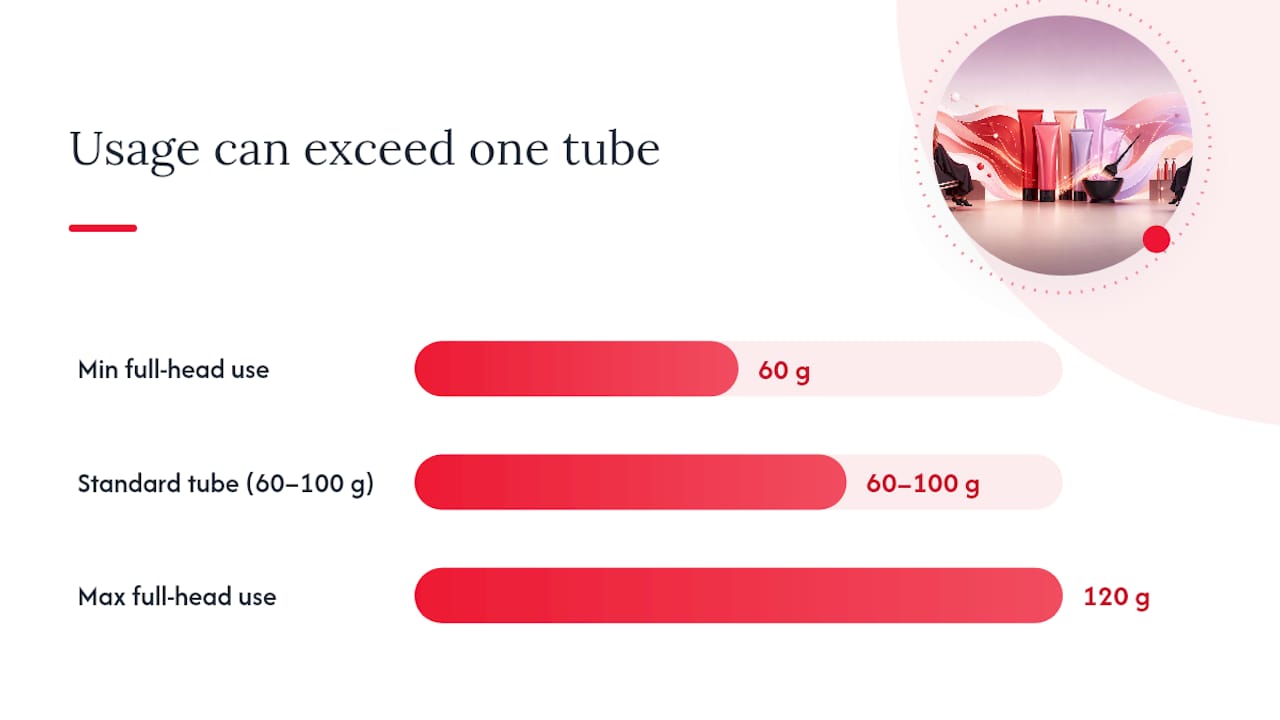
Cost per application comes down to three numbers: tube size, grams used per service, and your pro pricing from the supplier. A standard permanent tube runs 60 to 100 grams, and an average full-head application uses somewhere between 60 and 120 grams depending on hair length and density. Divide your wholesale cost per tube by grams used, and you’ve got your real product cost per service, before markup.
Stocking depends on your salon’s size. A 1 to 5 stylist salon can usually run lean, ordering biweekly. A high-volume suite with six or more colourists needs deeper safety stock to avoid mid-week shortages.
| Salon Size | Suggested Reorder Cadence | Core SKUs to Stock |
|---|---|---|
| 1 to 5 stylists | Biweekly | Permanent base, one demi/toner line, lightener, bond builder |
| more than 5 stylists (high volume) | Weekly | Full permanent range, demi/toner range, vivid concentrates, lightener, bond builder |
- Keep lightener and your most-used natural bases stocked at minimum 2 to 3 units per shade at all times
- Treat toners and vivid concentrates as lower-volume but high-margin, since they finish a look clients pay extra for
- Some entry-level or trend shades can act as loss leaders that bring clients in for a signature service, even at thin margin
What kind of customer support and guarantees should you expect?
A colour line is only as good as the support behind it once something goes sideways. Before you commit, ask what happens when a formula doesn’t perform the way the technical sheet promised, or when a shipment arrives short.
Look for a dedicated technical hotline or online resource centre where colourists can call with formulation questions mid-service, not just a general customer service email that takes three days to answer. Brands that take training seriously usually back it with the same seriousness on support: certified educators who can be reached for troubleshooting, not just sales.
Warranty and guarantee policies in this category rarely look like a consumer product return. Instead, look for satisfaction guarantees tied to trial kits, or a policy that lets you exchange unused stock if a line genuinely isn’t working for your clientele. A supplier’s willingness to stand behind a product with a real exchange or credit policy tells you more about their confidence in the formula than any marketing claim does.
Reorder support matters too. Ask whether pro pricing is locked in through a registered account, and whether there’s a straightforward process for reordering specific shades without minimum order headaches. Salon Brandz offers pro pricing through account registration and nationwide shipping, which keeps reorder logistics simple for salons juggling a busy chair schedule.
What shade range should a professional colour line offer?
A shade wall that only covers natural bases will leave you turning away clients who want vivids, pastels, or high-fashion tones. Look for a line that spans natural depth levels from black through pale blonde, plus a dedicated fashion or vivid concentrate range that intermixes with the base system rather than sitting apart from it.
Depth and coverage on natural shades matter most for grey-blending clients, who make up a steady portion of most salon books. A line with a wide natural range, including subtle warm, cool, and neutral variations within each level, lets your colourists match tone precisely instead of settling for “close enough.”
On the fashion side, hybrid pigment technologies let a single concentrated pigment range produce multiple tonal outcomes depending on which developer or lotion you pair it with. That kind of system saves shelf space and lets a smaller salon offer a bigger apparent shade range without stocking dozens of individual tubes.
Reviewers who evaluate professional brands consistently point out that custom-mixed formulas deliver more precise toning and better grey coverage than anything premixed off a box. That precision is the whole reason clients pay salon prices instead of grabbing a drugstore kit, and it’s worth explaining to clients during consultation so they understand what they’re paying for. Check out this rundown of essential professional hair colours for a breakdown of which formula types cover which client needs.
Does the colour line work across different hair types?
Not every formula performs the same way on coarse, fine, curly, or chemically treated hair, and a line that only tests well on one hair type will show inconsistent results across a diverse clientele.
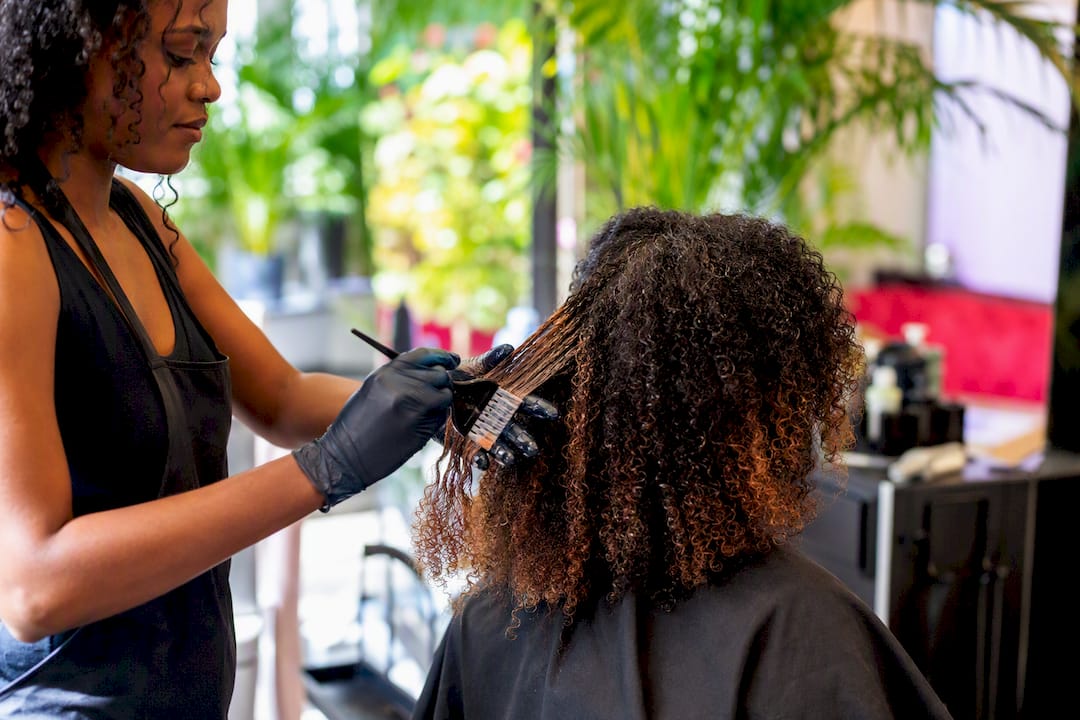
Coarse or resistant hair often needs higher lift or longer processing to achieve even coverage, while fine hair can over-process quickly with the same formula and timing. A well-designed professional line publishes processing time guidance by hair type and porosity, not just a single blanket timing across the whole shade range.
Curl pattern and texture also affect how colour disperses. Curlier textures can require different application techniques to get even saturation from root to tip, and a formula with strong slip and workability makes that easier to control during application. Chemically treated hair, whether from previous colour, keratin treatments, or relaxers, changes porosity enough that the same formula can behave completely differently than it does on virgin hair.
This is where a line’s compatibility with bond builders becomes more than a nice-to-have. Damaged or porous hair benefits from formulas designed to work alongside strengthening treatments, since that combination reduces breakage risk during processing. For guidance on matching specific colour types to specific textures, this guide on choosing hair colour by hair type walks through the practical matchups colourists rely on daily.
Are there safety and hypoallergenic considerations to check?
Every professional colour line should give you a full ingredient list and technical data sheet before it ever touches a client’s scalp, and any brand that makes that information hard to find deserves scrutiny.
Patch testing remains a standard safety step for any client using a new colour formula for the first time, particularly with permanent and demi-permanent products containing oxidative dyes. Ask your supplier whether the brand publishes clear allergy guidance and recommends a patch test window, typically 48 hours before the appointment, as part of its standard consultation process.
Some lines now market themselves as lower in specific irritants or free from certain common allergens like PPD, though “hypoallergenic” claims in cosmetics aren’t strictly regulated the same way drug claims are. Treat those claims as a starting point for conversation with clients who have sensitive skin or a documented allergy history, not a guarantee. Confirm the brand’s labelling aligns with Health Canada’s cosmetic ingredient disclosure expectations, since that’s the baseline every product sold in Canada needs to meet regardless of marketing language.
Ventilation and application safety matter too, especially with lightening products that produce fumes during processing. A brand that publishes clear technical data sheets usually includes handling and storage guidance alongside the ingredient list, which is worth reviewing with your whole team, not just the person who orders the product.
How Salon Brandz helps you switch colour lines with less risk
Switching a colour line is a financial decision as much as a technical one, and having a supplier that removes friction from the process changes how much risk you’re actually taking on.
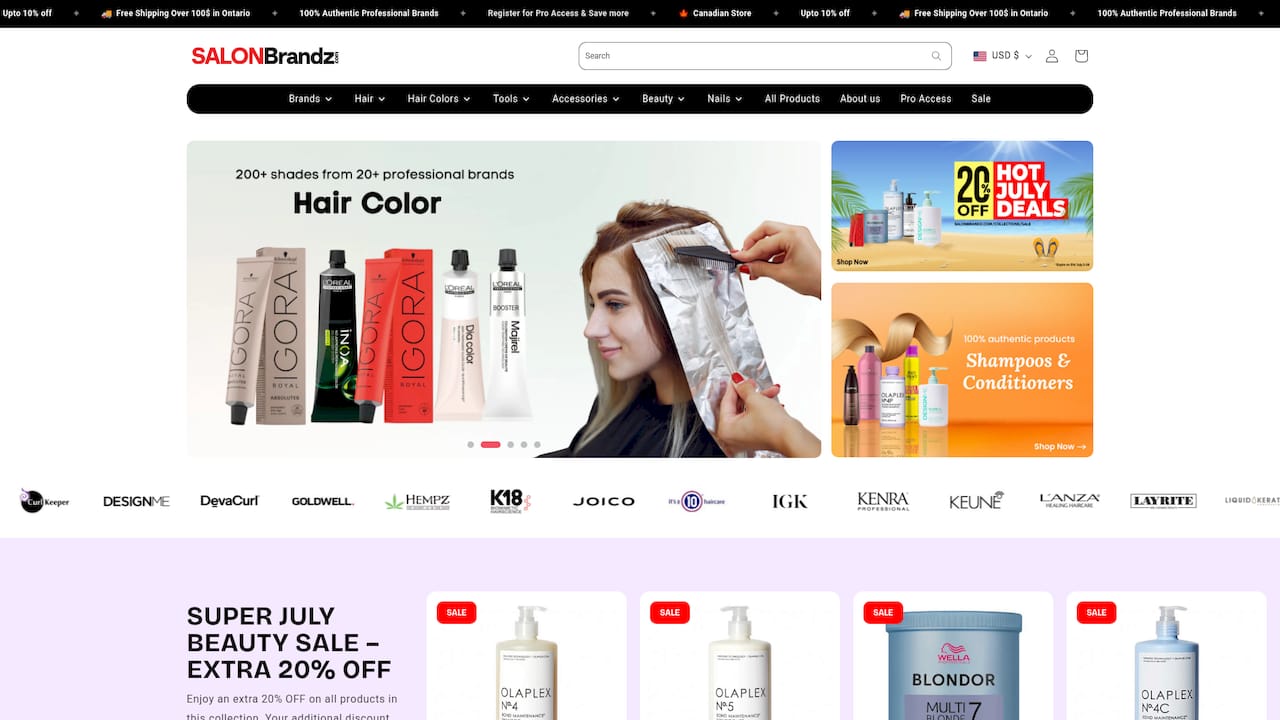
Salon Brandz ships professional salon products across the country and offers in-store pickup in Scarborough for salons that want their trial kit same-day rather than waiting on a courier. Pro pricing is available through account registration, which matters when you’re testing a new line’s cost-per-service before committing to full case orders. That combination, nationwide delivery plus local pickup, gives Ontario-based salons a faster path from decision to first client service than ordering direct from an overseas distributor.
Where Salon Brandz earns its place in a change-over plan is the practical stuff: sample and demo kits that let you trial a line on a handful of clients before buying stock, and access to a catalogue spanning over 75 professional brands so you’re not locked into one manufacturer’s ecosystem if a formula doesn’t suit your clientele. For salons planning a phased rollout like the one outlined above, that flexibility during the trial and early rollout weeks is worth more than any single brand’s shade chart.
If you’re ready to start, order a trial-size colour kit through Salon Brandz’s professional supplies catalogue and pair it with a few complementary retail products, like a bond-building serum, to round out the client experience during your pilot week.
A supplier’s honest starter advice
The single best first move is to order a mixed trial kit and book a half-day in-salon training session before you buy a single case of product. That one step tells you more about a line’s real-world performance than any shade chart or sales pitch ever will…
Sources
- Schwarzkopf Professional introduces switch page to streamline the color line transition process for colorists and salon owners
- Muk Hybrid Colour - Muk Salon Professional
FAQ
How long does it take to switch a salon colour line?
Most salons can pilot a new line within one to two weeks, with full staff rollout complete by week four if training is structured and staged properly.
Do professional colour lines really work better than box dye?
Yes. Professional formulas are custom-mixed for specific hair types and outcomes, giving more precise toning and grey coverage than premixed box dye.
What’s the biggest mistake salons make when choosing a colour line?
Buying full stock before trialling a sample kit is a common and costly error. Reviewing common salon product mistakes before you order can save thousands in unused inventory.
Can I get trial kits before committing to a full colour line?
Many suppliers, including Salon Brandz, offer sample and demo kits so you can test formulation and results before ordering full case sizes.
Does hair type affect which colour line I should choose?
Yes. Coarse, fine, curly, and chemically treated hair all respond differently to lift and processing time, so confirm a line’s guidance across textures before adopting it salon-wide.


