

Should you clarify your hair before colouring it?
Yes, clarify your hair 24 to 48 hours before a colour appointment, unless your hair is freshly bleached, chemically fragile, or your scalp is irritated. That single step removes the buildup that causes patchy, dull, or fast-fading color. It’s the closest thing to a free upgrade in the whole coloring process.
Two caveats matter more than the rest. First, skip or delay clarifying if your hair has recently been bleached, is highly porous, or your scalp feels tender or broken out. Second, if you’re wearing a vivid or semi-permanent colour you want to keep, clarifying can strip it faster, so use it sparingly and not right before a touch-up on colour you like.
Quick checklist before you commit:
- Clarify a day or two before your appointment, but avoid doing it the same day.
- Skip conditioner and oils right after clarifying so pigment has clean access to the shaft.
- Check the label for “colour-safe” and a chelating agent if you’re in hard-water territory.
Pro Tip: If you’re not sure whether your hair has buildup, do one test wash with a clarifying shampoo and see how much lather you get on the second pass. Thin, quick lather with visible squeak is a strong sign of buildup; if it lathers the same both times, you probably don’t need it.
Key Takeaways
Clarifying 24 to 48 hours before colour removes buildup that blocks even pigment absorption, but frequency and hair condition determine whether it helps or hurts.
| Point | Details |
|---|---|
| Timing is everything | Clarify 24 to 48 hours before your colour appointment, never the same day. |
| Not everyone should clarify | Skip it if hair is recently bleached, very porous, or the scalp is irritated. |
| Watch vivid and semi-permanent colour | Clarifying fades surface-deposited dye faster, so use sparingly if you want to keep it. |
| Check the label before buying | Look for “colour-safe” and a listed chelator like EDTA for hard-water areas. |
| Shop professional-grade options | Salonbrandz stocks salon-trusted clarifying and chelating shampoos across Canada. |
If your hair has had recent chemical processing, run your plan by your stylist before clarifying at home. And if you’re ready to pick up a colour-safe clarifying shampoo, Salonbrandz has professional options worth comparing.
A closing note from Salonbrandz
If you take one thing from this guide, make it the timing. Clarify 24 to 48 hours before your colour appointment, not the morning of, and match the product to your actual hair condition rather than grabbing whatever’s labelled “clarifying” on the shelf. Hard water calls for a chelator; heavy styling residue just needs a solid clarifying wash.
If your hair has been bleached recently, is unusually porous, or your scalp is acting up, talk to your stylist before you do anything at home. For everyone else, browsing professional-grade clarifying shampoos is a reasonable next step, and pairing that with the right professional hair colour afterward tends to give the most even, long-lasting result. If you’d rather have a professional handle the whole process, Parkland Nails & Spa is worth a look for a full-service appointment.
Table of Contents
- Why clarifying before colour actually changes the result
- Who should clarify before colour, and who should hold off
- When exactly should you clarify, and how often
- How to clarify your hair before colouring, step by step
- Choosing a clarifying shampoo that won’t work against your colour
- Does clarifying shampoo strip your colour, and how do you protect it after
- What stylists and hair science say about scalp safety and chelation
- Alternatives if a full clarifying wash feels too harsh
- Where to buy professional clarifying shampoo before your colour appointment
- Sources
- FAQ
Why clarifying before colour actually changes the result
Hair colour needs contact with the cuticle to process evenly, and buildup gets in the way. Silicones from conditioners, dry shampoo residue, sebum, and mineral deposits from hard water all sit on the hair shaft like a thin film. Colourists have flagged this for years: product and mineral buildup can act as a barrier that blocks even colour absorption, leading to duller tones, uneven patches, and colour that fades faster than it should.
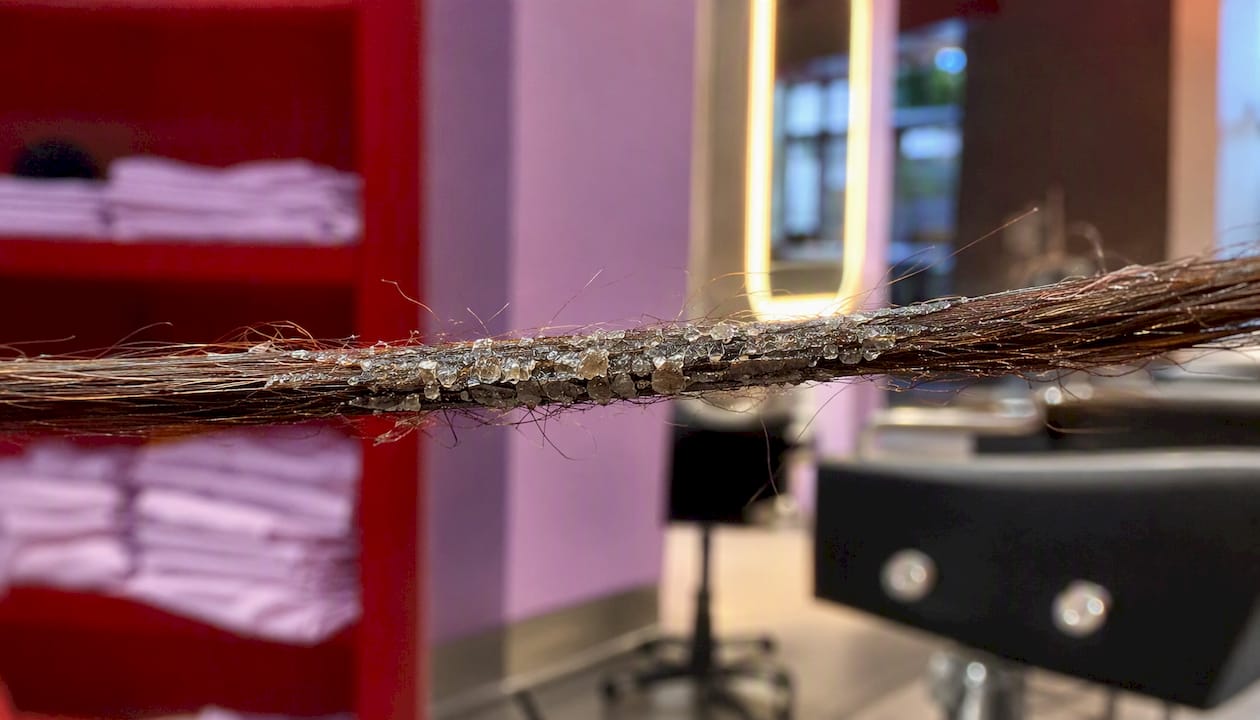
Here’s the mechanism in plain terms: hair colour molecules, whether permanent dye or a demi-permanent gloss, need to swell the cuticle and get pigment or lightener into the cortex. A layer of silicone or mineral scale slows that penetration unevenly across the head, so some strands take colour fully and others resist it. That’s how you end up with a colour that looks great at the crown and muddy at the nape.
Not every “cleaning” shampoo does the same job, though, and mixing them up is a common mistake.
| Shampoo type | Primary target | Typical outcome |
|---|---|---|
| Regular shampoo | Light daily oil and dirt | Gentle cleanse, buildup remains |
| Clarifying shampoo | Product residue, silicones, sebum | Strips buildup, resets the cuticle |
| Chelating shampoo | Mineral deposits (hard water, chlorine, iron) | Removes mineral scale that clarifiers can miss |
Many clarifying formulas include chelating agents from the EDTA family specifically to bind and lift mineral deposits, which is a different job than dissolving product residue, according to product testing on clarifying shampoos.
If you live somewhere with hard water, a clarifying shampoo alone might leave mineral scale behind. That’s when a chelating step, either as a separate product or a dual-action clarifying shampoo, earns its place in the routine.
Who should clarify before colour, and who should hold off
Certain hair situations respond well to a pre-colour clarify. Others need a gentler plan, or none at all.
Good candidates for clarifying before colour:
- Oily roots or scalp that feels weighed down within a day or two of washing.
- Heavy or frequent use of styling products, dry shampoo, or leave-in treatments.
- Regular exposure to hard water, well water, or a chlorinated pool.
- Hair that hasn’t seen a proper deep clean in several weeks.
Situations where you should delay or avoid it:
- Hair bleached or lightened within the past week or two.
- Very dry, brittle, or highly porous hair that already struggles to hold moisture.
- An active scalp irritation, sunburn, or recent chemical burn.
- Hair currently holding a vivid or semi-permanent colour you want to preserve.
| Situation | Recommended path |
|---|---|
| Oily scalp, product buildup, no recent chemical work | Clarify 24 to 48 hours before colour |
| Hard water area, mineral scale suspected | Chelating shampoo, once in the week before |
| Recently bleached or very porous hair | Skip clarifying, use gentle cleanser only |
| Wearing vivid or semi-permanent colour to keep | Avoid clarifying near that area, or skip entirely |
Pro Tip: If you’re on the fence, do a strand test on a small, hidden section 48 hours before your appointment. Wash that section with the clarifying shampoo you’re considering, then check how it feels once dry. If it’s noticeably drier or the colour lightened more than expected, tell your stylist before you commit your whole head.
When exactly should you clarify, and how often
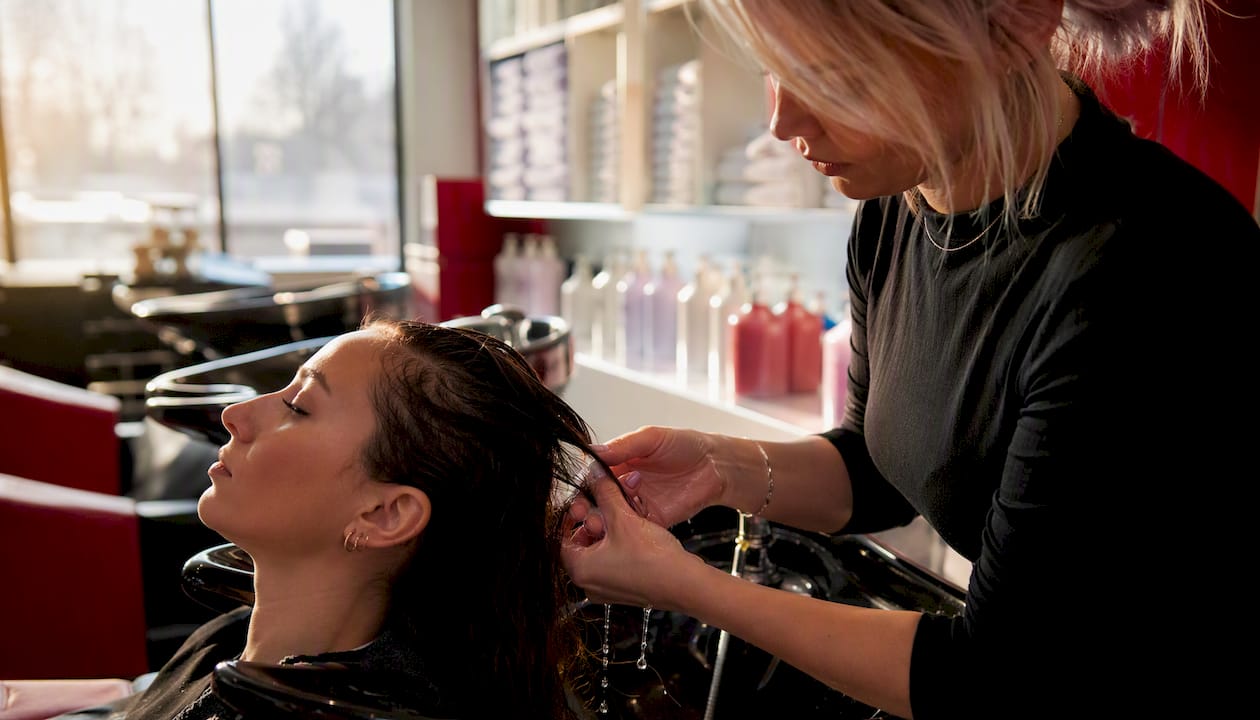
Stylists generally recommend clarifying your hair a day or two before you sit in the colour chair. That gap gives your scalp time to produce a light layer of natural oil again, which acts as a mild buffer during processing, while still leaving the hair shaft clean enough for even pigment uptake.
Same-day clarifying is where people go wrong. Stripping every trace of oil right before a chemical service removes a protective layer your scalp normally relies on, and salon guidance consistently warns against same-day strong cleansing for clients with sensitive skin, since it raises the risk of stinging or irritation during processing.
For ongoing maintenance once you’re colour-treated:
- Clarify no more than once every two to four weeks if you have colour-treated hair.
- Reserve chelating treatments for hard-water exposure specifically, not as a general weekly habit.
- Space clarifying at least several days away from your next colour refresh unless your stylist advises otherwise.
- Always follow with a moisture-focused conditioner on the days you’re not prepping for colour.
How to clarify your hair before colouring, step by step
This is the sequence salons generally follow when prepping a client’s hair, and it translates well to an at-home routine.
- Choose your product. Pick a clarifying shampoo labelled for your hair type, checking whether it contains a chelating agent if you’re dealing with hard water.
- Apply to wet hair. Work it through the scalp and length, focusing on roots where buildup concentrates most.
- Let it sit briefly. Most clarifying formulas need one to two minutes of contact time; check the label, since some chelating treatments call for slightly longer.
- Rinse thoroughly. Use lukewarm water and make sure no product residue remains, especially near the hairline.
- Skip the conditioner. Leave hair conditioner-free after this wash so the cuticle stays receptive and nothing coats the shaft again before colour day.
- Avoid oils and serums. Hold off on leave-in oils for the 24 to 48 hours leading into your appointment.
Watch for these product-label details before you buy:
- “Colour-safe” on the label, which signals a gentler surfactant blend.
- Whether EDTA or a similar chelator is listed, which matters more in hard-water regions.
- Recommended dwell time, since formulas vary from under a minute to several minutes.
Pro Tip: If you have textured or highly porous hair, cut the dwell time in half compared with the label instructions, and start a light deep-conditioning routine two to three days before your clarifying wash so the hair isn’t compensating for two stressors at once.
Choosing a clarifying shampoo that won’t work against your colour
Not every clarifying shampoo is built the same, and the differences matter more once colour is involved. Look for three things on the label: a “colour-safe” claim, a listed chelating ingredient if you’re managing hard water, and a stated dwell time so you’re not guessing.
| Product | Best suited for | Notable feature |
|---|---|---|
| Neutrogena Anti-Residue Shampoo | Heavy product buildup, occasional deep clean | Strong clarifying action, minimal frills |
| Kenra Clarifying Shampoo | Regular gym-goers, frequent stylers | Professional-grade formula, salon staple |
| Biolage Scalp Clarifying Shampoo | Oily scalps, root-focused buildup | Scalp-targeted formula with lighter ends treatment |
| Paul Mitchell Shampoo Two (Clarifying) | Pre-colour prep in professional settings | Long-standing salon standard for stripping buildup |
Reviewers and product testers have noted that modern clarifying formulas increasingly carry a “colour-safe” label, which reduces but doesn’t eliminate their potential to fade surface dye. That distinction matters if you’re clarifying around existing colour rather than before a fresh application.
If you’re buying professional-grade formulas rather than the drugstore versions, Salonbrandz stocks pro-supply options across most major clarifying and colour-safe lines, with size and dwell-time instructions listed on each product page so you’re not guessing at home. Checking the label for chelator content before you buy saves a wasted wash if you’re in a hard-water area.
Does clarifying shampoo strip your colour, and how do you protect it after
Clarifying shampoo can fade colour, but the risk depends heavily on what kind of colour you’re wearing. Surface-deposited dyes, semi-permanent colour, and vivid shades sit closer to the cuticle than permanent colour does, which means a strong clarifying wash lifts them faster. Brand guidance from colour-care specialists confirms that clarifying shampoos can be used safely on coloured hair when applied sparingly, but repeated use accelerates fading, particularly on deposit-only colour that never penetrated the cortex.
Signs you clarified too aggressively:
- Colour looks noticeably lighter or duller within one wash.
- Hair feels unusually dry, straw-like, or tangles more than normal.
- Vivid tones (pink, blue, copper) look washed out or patchy at the ends.
If that happens, a colour-depositing conditioner can bring back some vibrancy temporarily, but a full correction usually means booking with your colourist rather than experimenting further at home.
Pro Tip: Wait a minimum of 48 to 72 hours after a fresh colour service before your first wash, then switch to a sulfate-free, colour-safe shampoo for daily use going forward. That single swap does more for colour longevity than almost anything else you’ll buy.
| Timeline | Action |
|---|---|
| Immediately after colour | No wash, no clarifying, let colour fully set |
| 48 to 72 hours post-colour | First gentle wash with sulfate-free shampoo |
| Ongoing maintenance | Clarify sparingly, no more than every 2 to 4 weeks |
What stylists and hair science say about scalp safety and chelation
Salon professionals treat the 24 to 48 hour window as more than a scheduling habit. It’s a buffer that protects the scalp while still delivering a clean base for colour. That guidance lines up with clinical literature on skin barrier function, which notes that aggressive cleansing or chemical exposure can increase scalp sensitivity, particularly when it happens right before another chemical process like lightening or permanent colour.
Removing buildup is genuinely useful, but “clean is better” oversimplifies the picture. Stripping the scalp too aggressively right before a chemical service can raise irritation risk rather than improve the outcome.
The practical takeaway from both salon experience and the research: clarify with intention, not as a blanket habit before every appointment.
Pro Tip: Use a plain clarifying shampoo when the problem is product buildup, and reach for a chelating formula specifically when you know you’re dealing with hard water, well water, or chlorine exposure. Using a chelator every time you just need a basic deep clean tends to dry hair out faster than necessary.
Alternatives if a full clarifying wash feels too harsh
A clarifying shampoo isn’t the only route to cleaner hair before colour, and for some hair types it isn’t the best one.
Gentle cleansing conditioners, sometimes called co-washes, remove light residue without the stronger surfactants found in most clarifiers. They’re a reasonable middle ground for fine or already-dry hair that needs a refresh but can’t handle a full strip. DIY clarifying rinses, most commonly a diluted apple cider vinegar rinse, offer a milder mineral-removal effect than a chelating shampoo, though the results are less consistent and won’t match a professional-grade formula for heavy buildup. A baking soda rinse shows up often in home remedies too, but it skews alkaline and can roughen the cuticle with repeated use, so it’s not a substitute for a properly formulated clarifying or chelating shampoo before colour.
For most people planning a colour appointment, a labelled clarifying or chelating shampoo still gives more predictable, even results than a homemade version. Save the gentler alternatives for maintenance weeks between colour services.
Where to buy professional clarifying shampoo before your colour appointment
Once you know your hair needs a pre-colour reset, the product you grab matters. Salon-grade clarifying shampoos tend to have more consistent surfactant blends and clearer dwell-time instructions than budget versions picked up at random.
Salonbrandz carries clarifying and chelating shampoos from brands salons already trust, including options built for both mineral removal and general product buildup, all shipped across Canada with in-store pickup available in Scarborough. This isn’t the only place to find a decent clarifying shampoo, and no single formula fits every hair type, so check the label for a “colour-safe” claim and chelator instructions before you buy, no matter where you shop. If you want a place to start, browse the professional shampoo selection for colour-safe clarifying options, or head straight to Salonbrandz to compare formulas by hair type and buy before your next appointment.
Sources
- Clarifying Before Color Services: Why It’s So Crucial
- Does clarifying shampoo remove color? + other questions, answered
- Best clarifying shampoos
- PMC article (scalp / skin barrier research)
FAQ
What’s the best clarifying shampoo to use before colouring?
Salon-grade options like Kenra Clarifying Shampoo, Biolage Scalp Clarifying Shampoo, and Paul Mitchell Shampoo Two are widely used by stylists for pre-colour prep, while Neutrogena Anti-Residue Shampoo is a reliable drugstore choice for heavy buildup.
Can I dye my hair right after using a clarifying shampoo?
You can, but 24 to 48 hours between clarifying and colouring is the recommended gap, since it lets your scalp regain a light protective layer while keeping the hair shaft clean enough for even colour uptake.
Is it better to have dirty or clean hair before colouring?
Clean hair, specifically hair clarified 24 to 48 hours ahead, generally colours more evenly than hair with heavy product or mineral buildup, but hair scrubbed completely bare the same day can leave the scalp more sensitive during processing.
Does clarifying shampoo strip your colour?
It can, especially on surface-deposited semi-permanent or vivid dyes, but used sparingly on colour-treated hair it mainly removes dulling buildup rather than stripping the colour itself.


