


Permanent vs demi colour: which one is right for you?
If you want to go lighter or cover every grey completely, permanent colour is your answer. If you want to blend early greys, refresh a faded tone, or try something new without a long-term commitment, demi-permanent is the smarter pick.
Quick picks:
- Go lighter or cover 100% grey → permanent colour (ammonia + 20-vol+ developer, lifts and deposits)
- Blend greys up to ~50%, tone, or refresh → demi-permanent (low-volume developer, no ammonia, deposits only)
- Fragile, textured, or previously damaged hair → demi-permanent almost always, unless lightening is the goal
The single biggest chemistry difference: permanent uses ammonia and a higher-volume developer to open the cuticle and alter the cortex; demi uses a low-volume developer (typically 5–10 vol) and skips the ammonia entirely.
Table of Contents
- How does permanent hair colour actually work?
- What is demi-permanent colour and how does it work?
- How do permanent and demi colour compare side by side?
- Which option suits your goals? Pros, cons, and a decision checklist
- How to make your colour last longer: care steps by timeframe
- Can you switch between demi and permanent colour?
- Key takeaways
- The choice most people get wrong
- Professional colour and aftercare, delivered across Canada
- Sources and further reading
How does permanent hair colour actually work?
Permanent colour changes your hair at the cortex level. That is not a marketing claim; it is chemistry. Ammonia (or an ammonia substitute in gentler professional lines) swells the cuticle open, and a developer at 20 vol or higher drives oxidative dye molecules deep into the cortex where they bond and expand. The result does not wash out. It grows out.
Because the process removes natural melanin as it deposits new pigment, permanent colour is the only category that can reliably lighten hair without a separate bleaching step. The level system used in professional salons runs from 1 (black) to 10 (palest blonde), and lifting even one or two levels requires that oxidative reaction. Demi cannot do this.
The trade-off is structural. Repeated permanent applications, especially with higher developer volumes, raise hair porosity over time and can weaken the strand. Root touch-ups are typically needed every 4–6 weeks for full grey coverage, and colour-safe shampoo, a weekly conditioning mask, and UV protection between appointments all help maintain integrity.
Pro Tip: Never skip a strand test before a permanent application at home. Developer volume, processing time, and your hair’s existing porosity interact in ways that are hard to predict without one. A professional colourist can assess all three in a single consultation, which is why salon formulation consistently outperforms box colour for complex results.
For readers considering a professional permanent formulation, the difference between a salon-grade product and a drugstore box is primarily the precision of developer volume and the quality of conditioning agents built into the formula.
What is demi-permanent colour and how does it work?
Demi-permanent colour deposits pigment partially inside the hair strand using a low-volume developer and no ammonia, which makes it gentler than permanent colour but also less lasting. The low-volume developer (5–10 vol) opens the cuticle slightly, allowing dye molecules to sit just inside the outer cortex rather than bonding deeply. When the cuticle closes back, it traps some pigment, but not permanently.
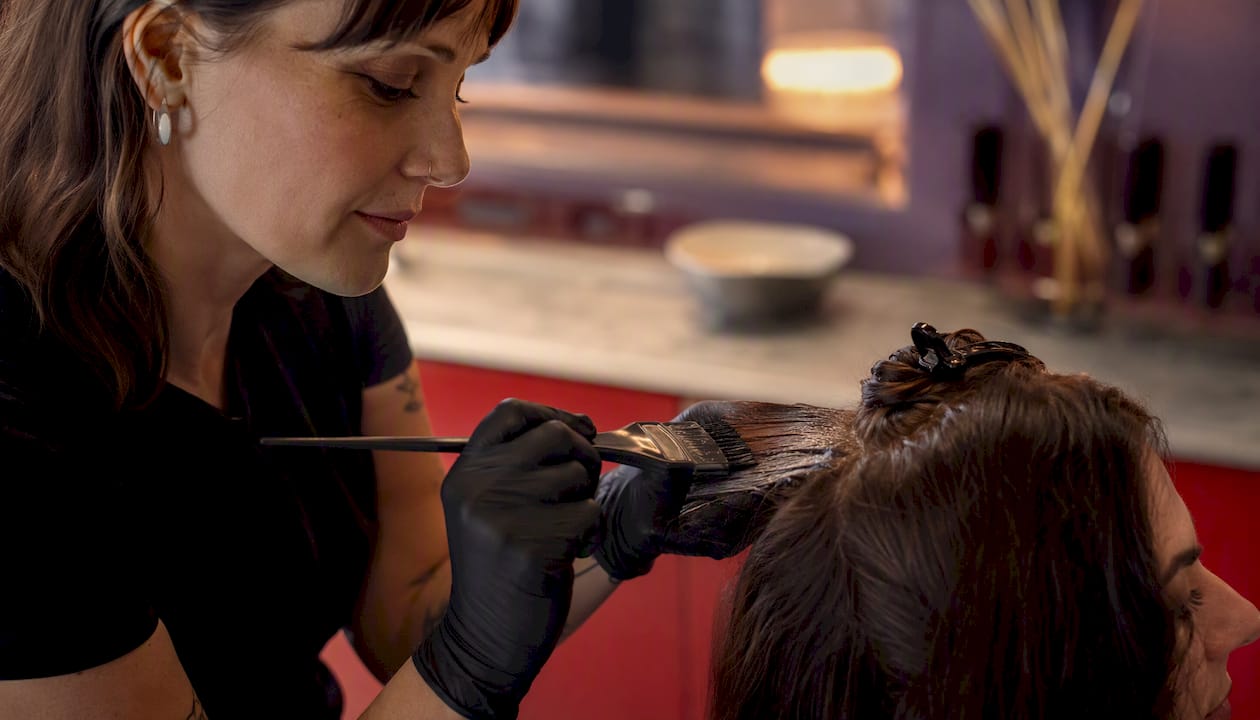
Longevity typically falls in the 12–28 wash range, with the wide spread explained by hair porosity, washing habits, and water temperature. Porous hair, which has a rougher cuticle surface, can absorb demi colour more deeply but also releases it faster. Washing with hot water and using clarifying shampoos can cut that lifespan nearly in half, according to cosmetic chemists.
Common uses for demi-permanent colour:
- Blending early or scattered greys (works well up to roughly 50% grey)
- Toning after a lightening service to neutralise brassiness
- Darkening or refreshing faded permanent colour between appointments
- Adding shine and depth without structural commitment
- A safer option for textured, fine, or chemically processed hair
Processing time sensitivity is real with demi. Leaving it on longer than directed, especially on high-porosity ends, can deposit more pigment than intended and darken unevenly. A strand test is just as worthwhile here as with permanent colour, particularly if your hair has been previously coloured.
How do permanent and demi colour compare side by side?
The key operational difference between these two categories comes down to developer presence, penetration depth, and what that chemistry can and cannot do. Semi-permanent sits on the cuticle with no developer at all; demi partially enters the cortex; permanent changes it.
| Dimension | Permanent colour | Demi-permanent colour |
|---|---|---|
| Longevity | Grows out (roots visible in 4–6 weeks) | 12–28 washes |
| Developer volume | 20 vol+ (oxidative) | 5–10 vol (low-volume) |
| Ammonia | Yes (or substitute) | No (typically) |
| Grey coverage | 100% reliable | Up to ~50% grey; blends, does not fully cover |
| Can lighten hair | Yes (with sufficient developer) | No — deposit only |
| Damage level | Moderate to high with repeated use | Low |
| Fading behaviour | Grows out at the root; mid-lengths hold colour | Fades gradually and evenly; softer regrowth line |
| Typical use-cases | Full coverage, lightening, long-term change | Toning, blending, refreshing, fragile hair |
| Touch-up cadence | Every 4–6 weeks for roots | Every 6–8 weeks or as needed |
Three practical takeaways from that table:
- If your grey is above 50% or you want a lighter shade, permanent is the only option that will actually deliver.
- If you are experimenting with a darker tone or want a low-maintenance refresh, demi gives you a result that fades gracefully without a hard regrowth line.
- Porosity changes the equation for demi: high-porosity hair can make demi behave more like semi-permanent, shortening longevity unpredictably.
Which option suits your goals? Pros, cons, and a decision checklist
Permanent colour
Pros: Full grey coverage, ability to lighten, long-lasting results, wide shade range at the professional level.
Cons: Root regrowth visible in 4–6 weeks, higher damage risk with repeated use, harder to reverse, requires more careful formulation.
Demi-permanent colour
Pros: Ammonia-free, low damage, softer regrowth, gentler on fragile or textured hair, fades evenly, good for toning and blending.
Cons: Cannot lighten, limited grey coverage, shorter lifespan, sensitive to washing habits.
Decision checklist
- Want to go a shade or two lighter → permanent
- Need 100% grey coverage → permanent
- Blending scattered or early greys (under 50%) → demi
- Refreshing colour between permanent appointments → demi
- Hair is fine, fragile, or chemically processed → demi
- Trying a new tone without full commitment → demi
- Want results that last beyond two months without touching up → permanent
In Canada, professional demi and permanent colour services are widely available at full-service salons in every major city. Costs vary considerably by region and salon tier, so calling ahead for a consultation quote is worthwhile before booking a corrective or first-time colour service.
How to make your colour last longer: care steps by timeframe
The single most effective thing you can do to extend colour life is reduce how often you wash with hot water. Cosmetic chemists note that hot-water washing is one of the fastest ways to shorten demi colour’s lifespan because heat swells the cuticle and releases trapped pigment. For permanent colour, the same principle applies to mid-length and end vibrancy.
| Timeframe | Action | Why it matters |
|---|---|---|
| Daily | Rinse with cool or lukewarm water | Keeps cuticle closed; slows pigment loss |
| Daily | Use a colour-safe heat protectant before heat styling | Heat opens the cuticle and fades colour faster |
| Weekly | Wash with a sulphate-free, colour-safe shampoo | Sulphates strip pigment more aggressively |
| Weekly | Apply a colour-depositing or conditioning mask | Replenishes moisture and adds tonal depth |
| Monthly | Use a purple or toning shampoo if you are blonde or toned | Neutralises brassiness between appointments |
| Monthly | Assess regrowth and schedule touch-up if needed | Keeps colour looking intentional, not grown-out |
- Switch to a sulphate-free shampoo immediately after colouring.
- Drop wash frequency to two or three times per week if your scalp allows it.
- Always apply a heat protectant before blow-drying or using a flat iron.
- Wear UV-protective products or a hat in direct sun; UV exposure fades colour measurably.
- Book a gloss or toning service between permanent appointments to refresh mid-length vibrancy.
Pro Tip: Check your hair’s porosity before choosing a formula. Porous hair absorbs demi colour quickly but releases it just as fast. A colourist can assess porosity in minutes and adjust developer volume or processing time accordingly, which prevents both under-deposit and unexpected darkening on the ends.
For professional demi-permanent options and colour-safe aftercare products available across Canada, Salonbrandz carries a range suited to both salon professionals and at-home users.
Can you switch between demi and permanent colour?
You can move in either direction, but the two directions are not equally straightforward. Going from demi to permanent is relatively simple: permanent colour can be applied over a demi base because it has the chemistry to penetrate past any residual demi pigment. The main caution is formulating correctly for your current base level, which a strand test will confirm.
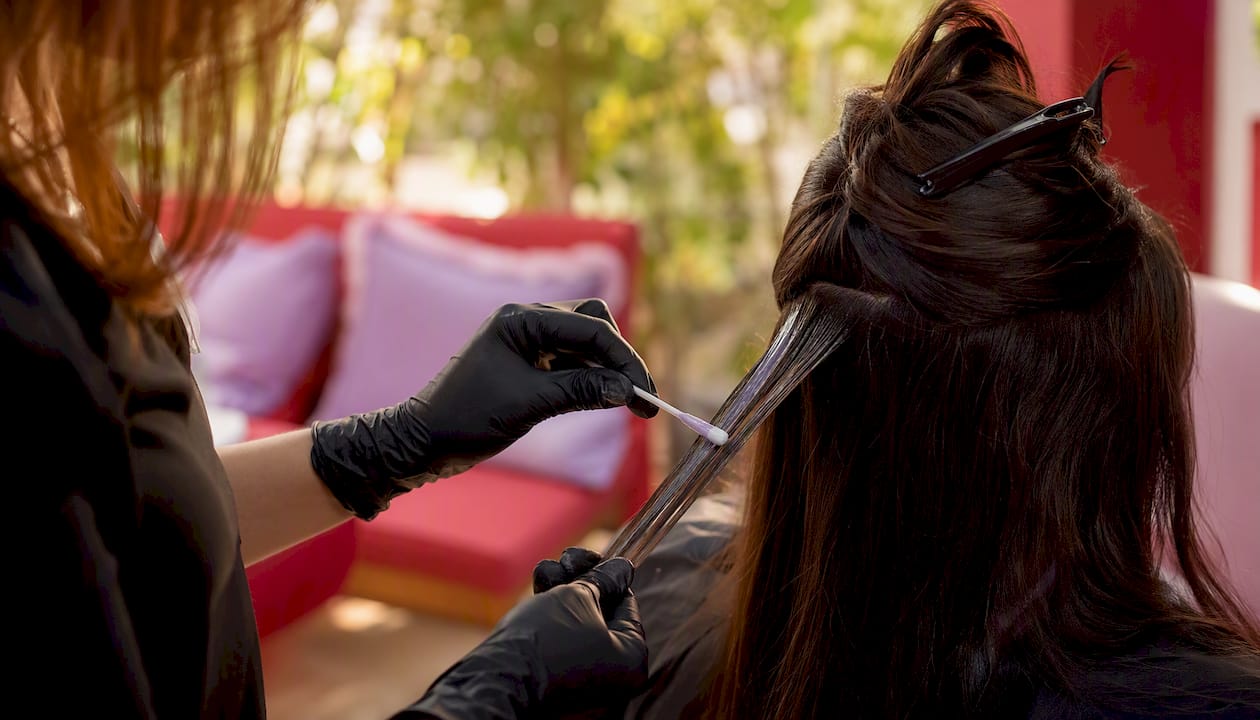
Going the other way is harder. A demi product cannot lift or remove existing permanent pigment because it lacks the oxidative chemistry to do so. If you want to transition from permanent back to demi maintenance, a stylist will typically use a colour remover or professional lightener to reset the base first, then apply demi as the ongoing formula. Expect more than one visit for a clean transition.
One mistake worth flagging: Wella and other professional sources are clear that you cannot replicate demi colour by simply mixing a permanent formula with a lower-volume developer. The dye molecule structures differ between the two categories, and the result is unpredictable, often muddy or unevenly deposited. They are genuinely different products, not the same product at different strengths.
Pro Tip: If you are unsure whether your hair has permanent or demi pigment from a previous service, ask your stylist to do a strand test with a small amount of colour remover. The result tells you exactly what you are working with before committing to a full application.
When to book a consult rather than DIY: any time you are correcting colour, transitioning formulas, or working with more than 30% grey. A single professional consultation almost always saves time and money compared to fixing a result that went wrong at home.
Key takeaways
Permanent colour is the only option that can lighten hair or deliver 100% grey coverage; demi-permanent is the lower-damage choice for toning, blending, and refreshing colour between appointments.
| Point | Details |
|---|---|
| Lightening requires permanent | Only permanent colour with 20-vol+ developer can lift natural melanin from the cortex. |
| Demi lasts 12–28 washes | Longevity depends on porosity, wash frequency, and water temperature. |
| Grey coverage threshold | Demi blends greys effectively up to roughly 50%; above that, permanent is needed. |
| Damage scales with chemistry | Permanent raises porosity over time; demi is ammonia-free and gentler on fragile hair. |
| Salonbrandz for professional products | Salonbrandz supplies professional demi and permanent colour lines with shipping across Canada. |
The choice most people get wrong
Most people treat permanent and demi colour as points on a single scale, as though demi is just a milder permanent. It is not. The chemistries are genuinely different, and that distinction changes what is possible, not just how long the result lasts.
The practical mistake this leads to: people with 60–70% grey reach for demi because they want less damage, get patchy coverage, and conclude that demi “doesn’t work.” It works exactly as designed. It was never built for full grey coverage. The right answer for that goal is permanent colour with a conditioning professional formula, not a compromise product.
The reverse mistake is just as common. People with healthy, lightly greying hair use permanent colour every six weeks because they assume it is more reliable, accumulating damage that eventually requires a corrective treatment. For blending a few greys and keeping colour fresh, demi is not a lesser option. It is the correct one.
Choosing the right formula starts with an honest assessment of your grey percentage, your lightening goals, and your hair’s current condition. Those three factors, more than brand or price, determine which category will actually deliver what you want.
Professional colour and aftercare, delivered across Canada
Salonbrandz stocks professional-grade permanent and demi-permanent colour lines alongside the colour-safe aftercare products that make results last. Whether you are a salon owner restocking your colour bar or an individual looking for the same quality your stylist uses, the difference from drugstore alternatives is formulation precision and conditioning quality built into every product.

From sulphate-free shampoos and toning treatments to heat protectants and curl-safe styling products, everything ships across Canada with in-store pickup available in Scarborough near Toronto. Browse the full range of professional salon supplies at Salonbrandz and find the right colour and aftercare combination for your next service.
Sources and further reading
- What Is Demipermanent Hair Color? Experts Explain | Allure
- Wella Company — professional colour resource
- Semi-Permanent vs Demi-Permanent Hair Color: What’s the Difference? | HairStyleMojo
- What is demi-permanent hair colour? — Byrdie
- Semi-Permanent vs Permanent vs Demi-Permanent Hair Color - Key Differences
- Temporary, demi & permanent hair colour guide — Clairol
- Hair colours — HairTypes
- Hair colour types — Byrdie


