


Purple shampoo use: the complete how-to guide
Purple shampoo deposits violet pigment onto the hair surface to neutralize yellow and brassy tones — it does not lighten hair, strip colour, or act as a permanent dye. If you have blonde, bleached, lightened brunette, silver, or grey hair, it belongs in your routine. Most stylists recommend using purple shampoo once or twice a week as a maintenance treatment, adjusting frequency up or down depending on how quickly you see brassiness returning and your hair’s response. Very porous or platinum strands may need less frequent use and shorter leave times.
Quick-start checklist before your first use:
- Do a strand test on a hidden section first (30–60 seconds, then check the colour)
- Start with the shortest leave time and build up gradually
- Apply to damp, not soaking wet, hair for even pigment distribution
- Always follow with a hydrating conditioner or purple conditioner
- Use alongside a colour-safe hydrating shampoo, not as a daily replacement
Table of Contents
- How purple shampoo works and why it’s purple
- The science of violet pigments and why porosity matters
- Who should use purple shampoo — and who should be careful
- How often to use purple shampoo: a practical guide by hair type
- How long to leave purple shampoo in: timing by hair type
- Step-by-step: how to apply purple shampoo correctly
- What to do if you over-tone: fixing purple or ashy results
- What to use alongside purple shampoo: conditioners, masks, and maintenance
- Pro tips from stylists: fine-tune your routine by porosity and lifestyle
- Key takeaways
- A note on getting the most from your toning routine
- Professional purple shampoo, available across Canada
- Sources and further reading
How purple shampoo works and why it’s purple
Purple shampoo is a pigmented toning shampoo. It contains violet dye that deposits a thin layer of colour onto the hair surface during washing to neutralize warm, yellow undertones. That is the entire mechanism: colour theory, not chemistry.
The reason it works comes down to the colour wheel. Purple sits directly opposite yellow, so when violet pigment meets yellow tones on the hair shaft, the two cancel each other out. The result is a cooler, more neutral or ash-toned blonde. It is worth knowing that purple shampoo does not lighten hair — it layers over the existing colour to shift the hue, nothing more.
Purple vs. blue shampoo: this is a common point of confusion. Purple shampoo targets yellow tones, making it the right choice for blonde, silver, and white hair. Blue shampoo targets orange tones, which makes it better suited to lightened brunettes or darker blondes dealing with copper or orange brassiness. If your unwanted tone reads more orange than yellow, blue is the one to reach for.
The science of violet pigments and why porosity matters
Violet pigments in purple shampoo work by adhering to the outer layer of the hair shaft, the cuticle, during the wash process. When the cuticle is slightly lifted by water and surfactants, pigment molecules settle into the surface and temporarily shift the tone. The effect fades with subsequent washes, which is why consistent use is part of any toning routine.
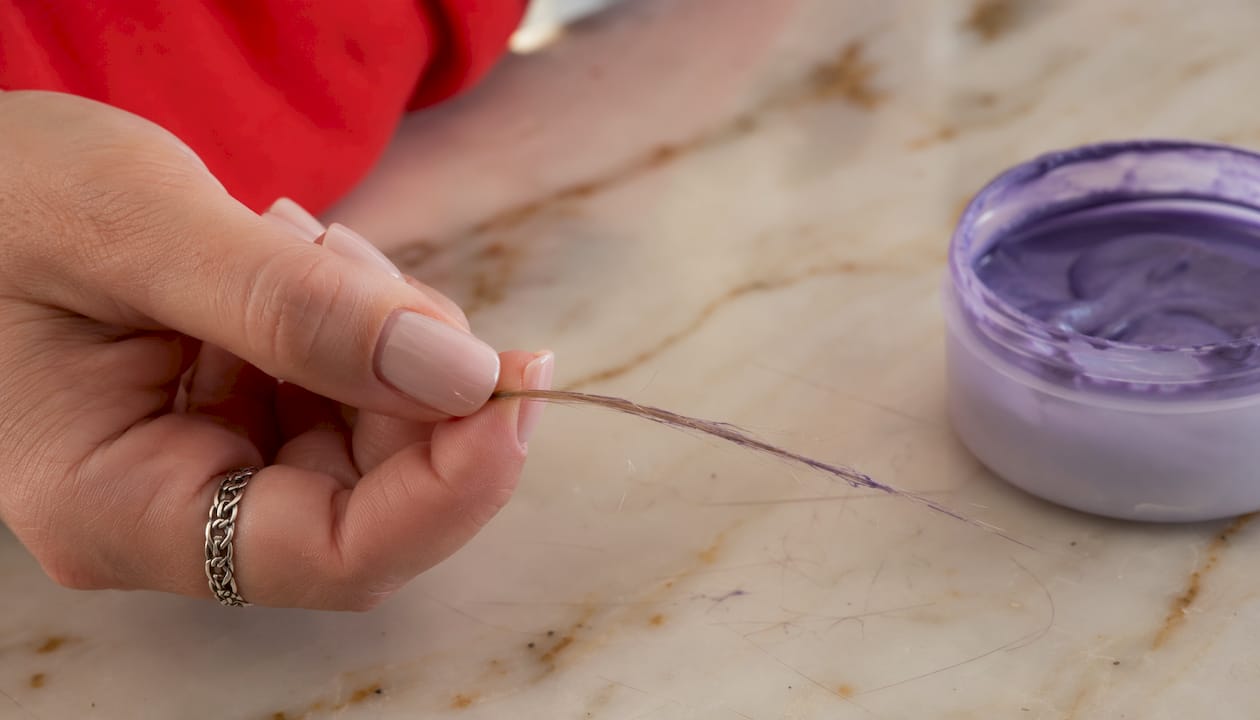
Porosity changes everything here. Porous or chemically damaged hair has a rougher, more open cuticle, which means it accepts pigment faster and more intensely. What takes a low-porosity strand five minutes to absorb can happen in under a minute on bleached or over-processed hair. This is why the same product and the same leave time can produce very different results on two people.
Key ingredients to look for on the label:
- Violet or purple dye (the active toning agent)
- Gentle, sulphate-free surfactants to cleanse without stripping colour
- Moisturising agents such as hyaluronic acid, argan oil, or hibiscus extract to offset any drying effect
- Proteins (keratin, hydrolysed wheat protein) for damaged or porous hair
Pro Tip: Apply purple shampoo to damp, not dripping wet hair. Soaking wet hair creates a water barrier that dilutes the pigment before it can adhere properly, leading to uneven or weak toning. Towel-blot first, then apply.
Who should use purple shampoo — and who should be careful
Purple shampoo is not a one-size-fits-all product. It works brilliantly for some hair types and can cause problems for others.
Hair types that benefit most:
- Bleached or platinum blonde hair
- Highlighted blondes (balayage, foils, or ombré)
- Lightened brunettes with visible yellow or gold tones
- Grey and silver hair prone to yellowing from environmental exposure
- Natural white hair that picks up warmth over time
- Pastel lilac or cool-toned colour (used selectively and briefly)
For grey and silver hair, purple shampoo is particularly useful because environmental factors like sun, hard water, and pollution cause yellowing even without chemical processing. Some professionals recommend using purple shampoo at every wash for natural white or grey hair to maintain brightness, while others suggest a less frequent, tailored routine based on your hair’s needs.
When to be cautious:
- Dark brunettes with orange brassiness: orange tones need blue pigment, not violet. Purple shampoo will do little for you here.
- Very porous or damaged hair: pigment absorbs rapidly and unevenly, raising the risk of patchy violet staining. Repair the hair first with protein and moisture treatments.
- Pastel colours: purple shampoo can shift delicate pastel shades unpredictably. Strand-test every time.
- Recent salon toner: wait one to two weeks after a professional toning service before introducing purple shampoo at home. Layering toners too soon leads to unpredictable results.
If you are dealing with extreme brassiness, patchy porosity from overlapping chemical services, or a fresh salon colour, book a consultation rather than experimenting at home; consider using a professional salon scheduling platform to easily manage your appointments and ensure timely corrective services.
How often to use purple shampoo: a practical guide by hair type
Frequency depends on your hair’s current state, not a fixed calendar. Use it when brass shows, not on a rigid schedule.
Frequency recommendations vary by hair type and desired brass reduction. Most professionals advise using purple shampoo once or twice per week for maintenance, but this can range from once every two weeks to every wash depending on visible brass and hair response.
A few practical rules for building this into your weekly routine:
- Alternate purple shampoo with a colour-safe hydrating shampoo to prevent moisture loss
- If you want to use it more often without over-toning, dilute it with your regular shampoo for a gentler wash
- Scale back immediately if hair starts looking dull, flat, or darker than expected — those are signs of over-toning
Signs you are using it too often: hair appears ashy or muted rather than bright, the tone looks darker than your target, or you notice a faint violet cast in natural light. Cut back to once a week and add a hydrating mask.
How long to leave purple shampoo in: timing by hair type
Leave time is where most people go wrong, in both directions. Too short and you see no change; too long and you end up with an unwanted lavender tint.
General time ranges:
- 30 seconds–1 minute: very porous, bleached, or platinum hair; first-time users
- 1–3 minutes: standard use for highlighted blondes and lightened brunettes
- 3–5 minutes: stubborn brassiness on lower-porosity hair; use only after confirming tolerance with a strand test
Modifiers that affect your timing:
- High porosity: shorten the time; pigment absorbs faster
- Previous professional toner: start shorter; the toner has already done some work
- Thick or coarse hair: may need slightly longer for even penetration
- High-pigment or professional-strength formula: treat it like high-porosity hair and start at 30 seconds
How to do a strand test: select a small section at the nape of the neck or behind the ear. Apply the shampoo, set a timer for 30 seconds, rinse, and dry the strand. Assess the tone in natural light. If the result is good, that is your baseline time. If you want more neutralization, add 30 seconds on the next test. Never skip this step with a new product or after a chemical service.
Step-by-step: how to apply purple shampoo correctly
Getting the application right matters as much as the timing. Uneven distribution is the main cause of patchy toning.
- Pre-wash (optional): if you have significant product build-up, do one quick rinse with a clarifying shampoo first. Build-up creates a barrier that prevents even pigment contact.
- Towel-blot your hair until it is damp but not dripping. This is the single most important prep step.
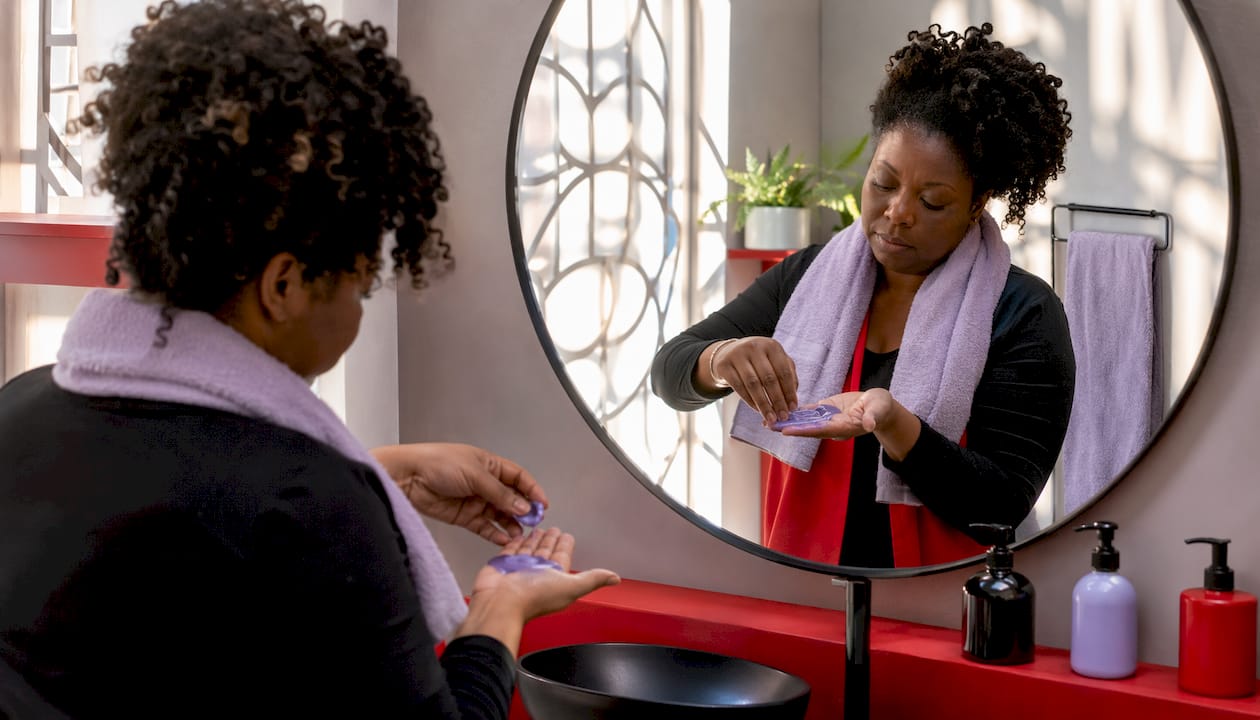
- Apply a small amount to your palms and work it through mid-lengths and ends first, where brassiness is usually most visible. Avoid the roots unless they are lightened — roots are more porous and will absorb pigment faster, which can create a darker band at the scalp.
- Distribute evenly using your fingers or a wide-tooth comb. Every strand should be coated.
- Set a timer based on your strand test result. Do not guess.
- Rinse thoroughly with cool or lukewarm water. Hot water opens the cuticle and can cause pigment to bleed unevenly.
- Follow immediately with conditioner. Purple shampoo can be drying, especially on chemically treated hair. A hydrating conditioner or a purple conditioner locks in moisture and extends the toning effect.
Dilution option: mix a small amount of purple shampoo with your regular colour-safe shampoo in your palm before applying. This creates a gentler toning wash you can use more frequently without risking over-toning — a technique many stylists recommend for clients who want subtle, ongoing maintenance.
What to do if you over-tone: fixing purple or ashy results
Over-toning happens to everyone at some point. The good news is it is almost always reversible at home.
- Wash with a clarifying shampoo once or twice. Clarifying formulas remove surface pigment faster than regular shampoo. Do not scrub aggressively; let the formula do the work.
- Use warm water during the clarifying wash. Slightly warmer water helps lift surface pigment without damaging the hair shaft.
- Follow with a deep conditioning mask. Clarifying shampoos strip moisture, so a deep conditioning treatment after each clarifying wash is non-negotiable.
- Repeat over two to three washes rather than trying to fix it in one session. Gradual removal is gentler on the hair.
- For stubborn or uneven violet staining: a chelating treatment (designed to remove mineral and product build-up) can help lift pigment more effectively than a standard clarifying shampoo. These are available at professional beauty suppliers.
Warning for porous hair: if your hair is already damaged, multiple clarifying washes in quick succession can cause further dryness and breakage. Space them out by at least one day and use a protein-rich conditioner between sessions.
When to book a salon appointment: if the violet tint is uneven, if the hair looks significantly darker than your target shade, or if home clarifying washes are not shifting the colour after three attempts, a professional corrective toning service is the right call. A few clarifying washes handle most mild cases, but persistent or patchy staining benefits from professional correction.
What to use alongside purple shampoo: conditioners, masks, and maintenance
Purple shampoo is a toning treatment, not a complete hair care routine. Pairing it with the right products keeps hair healthy while the toning does its job.
Product types to include in your routine:
- Colour-safe hydrating shampoo: use this on the days you are not using purple shampoo. It cleanses without stripping colour or moisture.
- Purple conditioner or toning mask: extends the toning effect between purple shampoo washes and adds moisture back to the hair.
- Weekly deep-conditioning mask: especially important for bleached or chemically treated hair. Look for masks with moisturising agents and proteins.
- Leave-in conditioner or treatment: applied after washing, it protects against heat and environmental damage between washes.
- Heat protectant: if you use a blow-dryer, flat iron, or curling iron regularly, a heat protectant is not optional.
For a complete hair care routine that integrates toning with proper moisture maintenance, alternating purple shampoo with a nourishing colour-safe formula is the most reliable approach. Ingredient priorities for damaged or porous hair: look for humectants (glycerin, hyaluronic acid), emollients (argan oil, shea butter), and proteins (keratin, hydrolysed silk) to rebuild and seal the cuticle between toning sessions.
Pro tips from stylists: fine-tune your routine by porosity and lifestyle
The difference between a good toning result and a great one usually comes down to knowing your hair’s porosity and adjusting accordingly.
Quick porosity test: drop a clean, dry strand of hair into a glass of room-temperature water. If it sinks quickly, your hair is high porosity. If it floats for a while before slowly sinking, it is medium porosity. If it stays on the surface, it is low porosity. High-porosity hair needs shorter leave times and more frequent conditioning; low-porosity hair can handle slightly longer processing but needs heat (a shower cap traps warmth) to help pigment penetrate.
Lifestyle adjustments:
- Swimmers: chlorine and pool minerals accelerate brassiness and increase porosity. Use a clarifying shampoo after every swim, then follow with purple shampoo once or twice a week. A leave-in conditioner before swimming creates a partial barrier.
- Frequent heat styling: daily heat opens the cuticle and fades tone faster. Shorten the interval between purple shampoo uses and always apply a heat protectant.
- Hard water: mineral deposits from hard water (common in many parts of Canada) cause yellowing and dullness. A chelating or mineral-removing shampoo used monthly helps, and it makes your purple shampoo work more effectively on a clean surface.
- High sun exposure: UV light breaks down cool tones quickly. A UV-protective leave-in or hair sunscreen extends the life of your toning between washes.
Pro Tip: Dilute purple shampoo with your regular colour-safe shampoo in a 1:3 ratio for a gentler daily-maintenance wash. This preserves shine, prevents pigment build-up, and lets you tone more frequently without the risk of over-toning.
For readers with textured or curly colour-treated hair, the same porosity rules apply, but moisture retention is even more critical. Check out the curly hair care routine guide at Salonbrandz for curl-specific conditioning advice that pairs well with a toning routine.
Key takeaways
Purple shampoo works best when used prescriptively: apply it when brass appears, start with the shortest leave time, and always pair it with a hydrating conditioner to protect colour-treated hair.
| Point | Details |
|---|---|
| Strand-test first | Always test on a hidden section for 30–60 seconds before full application. |
| Start short, build slowly | Begin with 1–3 minutes; increase only after confirming your hair tolerates the timing. |
| Use once or twice a week | Alternate with a colour-safe hydrating shampoo; tailor frequency up or down if hair looks dull, ashy, or overly cool. |
| Fix over-toning with clarifying washes | A few clarifying washes plus deep conditioning fade unwanted violet tints at home. |
| Salonbrandz for professional supply | Salonbrandz carries professional-grade purple shampoos and allied colour-care products, with shipping across Canada and in-store pickup in Scarborough. |
A note on getting the most from your toning routine
The most common mistake with purple shampoo is treating it like a regular daily cleanser. It is not. It is a targeted toning treatment, and the moment you start using it every single wash without monitoring the result, you are likely to end up with hair that looks darker and flatter than your target shade. Over-toning removes too much yellow, and yellow is part of what gives blonde hair its brightness and dimension.
What actually works is a responsive approach: use it when you see warmth returning, not on a rigid schedule. Sun, hard water, heat styling, and the number of washes since your last salon visit all affect how fast brass comes back. Two people with the same colour can need very different frequencies. The stylists who get the best results treat purple shampoo the way a chef treats seasoning: a little at a time, taste as you go, and never dump the whole bottle in at once.
The other thing worth saying: porosity is the variable most people ignore, and it is the one that matters most for timing. A 30-second leave time on bleached platinum hair can deliver the same result as five minutes on a low-porosity natural blonde. If you have never done a porosity test, do one before your next toning wash. It will tell you more about how to use any toning product than any general guideline can.
Professional purple shampoo, available across Canada
Brass-free, cool-toned hair starts with a professional-grade formula. Salonbrandz stocks a curated range of professional salon products for both stylists and individuals, including purple shampoos, colour-safe conditioners, and toning masks from trusted professional brands.
Whether you are a salon professional restocking your back bar or someone maintaining a fresh colour at home, Salonbrandz ships across Canada with in-store pickup available in Scarborough, near Toronto. No minimum order, no complicated process. Browse the full range online and order directly, or visit the Scarborough location to get product advice in person. Visit Salonbrandz to find the right purple shampoo for your hair type and have it delivered to your door.
Sources and further reading
- What does purple shampoo do? Benefits and how to use — Medical News Today
- Purple shampoo: What can it do? — Healthline
- What does purple shampoo do? How often to use purple shampoo — Redken
- Can you use purple shampoo every day? — L’Oréal Paris
- Purple shampoo: your guide — Wella Professionals Canada
- How to use purple shampoo, according to top hair stylists — Glamour UK
- 12 best professional shampoos for salon use — Salonbrandz
- Hair care routine for healthy, shiny hair — Salonbrandz


