


Round brush types for salon-style blowouts: a complete guide
There are three practical round brush families to know: boar bristle, nylon (synthetic), and mixed (boar + nylon). Pair bristle type with the right barrel material and diameter, and you can replicate a salon blowout at home. Here is the fast version before the full breakdown.
By hair length and goal:
- Short hair (bangs, pixie, bob): Use a small barrel suitable for short lengths. Boar or mixed bristles help with smoothing and root lift.
- Medium hair (shoulder length): Choose a mid-range barrel to add volume and bend with mixed bristles and ceramic barrels.
- Long hair: Large barrels paired with mixed or nylon bristles and ceramic or tourmaline barrels help achieve smooth, straight results.
- For tight curls, smaller barrels are best; for volume, medium sizes; and for smooth, straight styles, larger barrels.
On hot-air brushes: they are convenient and faster, but a classic round brush paired with a professional dryer still gives you more tension control and a longer-lasting shape. If you style regularly and care about the finish, the two-tool method is worth the extra step.
Table of Contents
- What do the different bristle types actually do?
- How do barrel materials affect heat and finish?
- What size round brush do you need for your hair length?
- Classic round brush vs hot-air brush: which should you use?
- How to choose the right round brush before you buy
- How to do a salon-style blowout at home: step by step
- How to clean and maintain your round brush
- Key takeaways
- The part most people skip — and why it matters most
- Professional round brushes at Salonbrandz, shipped across Canada
- FAQ
What do the different bristle types actually do?
The bristle material is the single biggest factor in how a round brush interacts with your hair. It determines grip, smoothing, static, and whether the brush suits your texture.
Boar bristle Boar bristles are cut from natural animal hair, and their surface structure is close enough to human hair that they distribute your scalp’s natural oils along the shaft as you brush. The result is shine and smoothing, with relatively gentle grip. They work best on fine to normal hair that does not need aggressive detangling. On thick or coarse hair, boar bristles alone can feel like they are sliding rather than gripping.
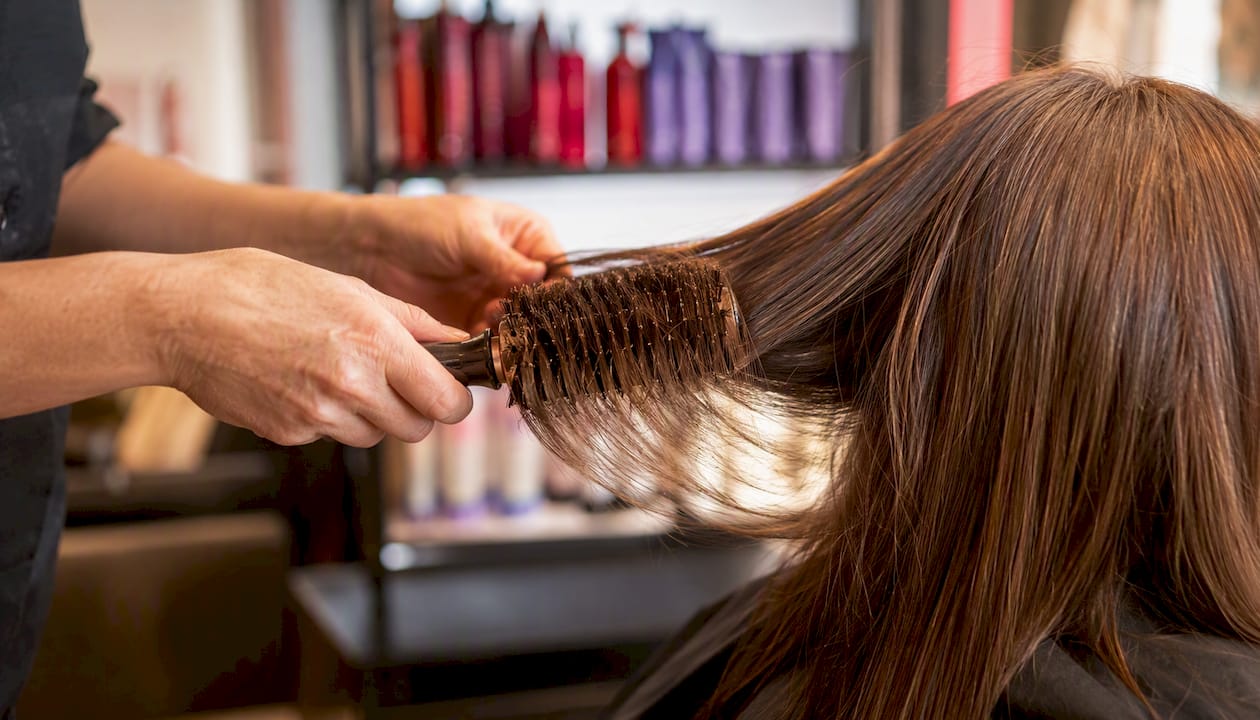
Nylon (synthetic) pins Nylon pins are stiffer and create more friction against the hair shaft. That friction translates to grip and tension, which is exactly what you need for detangling or for styling thick, coarse, or layered hair. The trade-off is static, especially on fine or dry hair. Nylon-only brushes are rarely the first choice for a polished blowout finish, but they earn their place when you need the hair to stay put on the barrel.
Mixed bristles (boar + nylon) Mixed brushes combine both materials, usually alternating boar tufts with nylon pins. You get the smoothing and shine of boar alongside the grip of nylon, which is why mixed-bristle brushes are commonly recommended by stylists as a versatile choice for most hair types. For blowouts specifically, the combination lets you maintain tension without sacrificing the smooth finish.
- Boar: shine, oil distribution, fine to normal hair
- Nylon: grip, detangling, thick or coarse hair
- Mixed: balance of both, suits most textures for blowouts
Pro Tip: If you are unsure which bristle type to start with, choose a mixed-bristle brush. It handles the widest range of textures and is the most forgiving when technique is still developing.
How do barrel materials affect heat and finish?
The barrel is what retains and transfers heat to your hair. Different materials behave very differently under a dryer, and choosing the wrong one can mean uneven drying, frizz, or heat damage.
Ceramic barrels distribute heat evenly across the surface, which reduces hot spots. For most people, a ceramic barrel paired with mixed bristles is the standard professional recommendation because it balances heat retention with frizz control. Ceramic is a safe, reliable choice for regular use.
Tourmaline and ionic coatings are applied over ceramic or metal barrels. Tourmaline emits negative ions when heated, which counteract the positive charge that causes frizz and static. If your hair is prone to frizz or you live somewhere humid (a real consideration across much of Canada), a tourmaline-coated barrel is worth the upgrade.
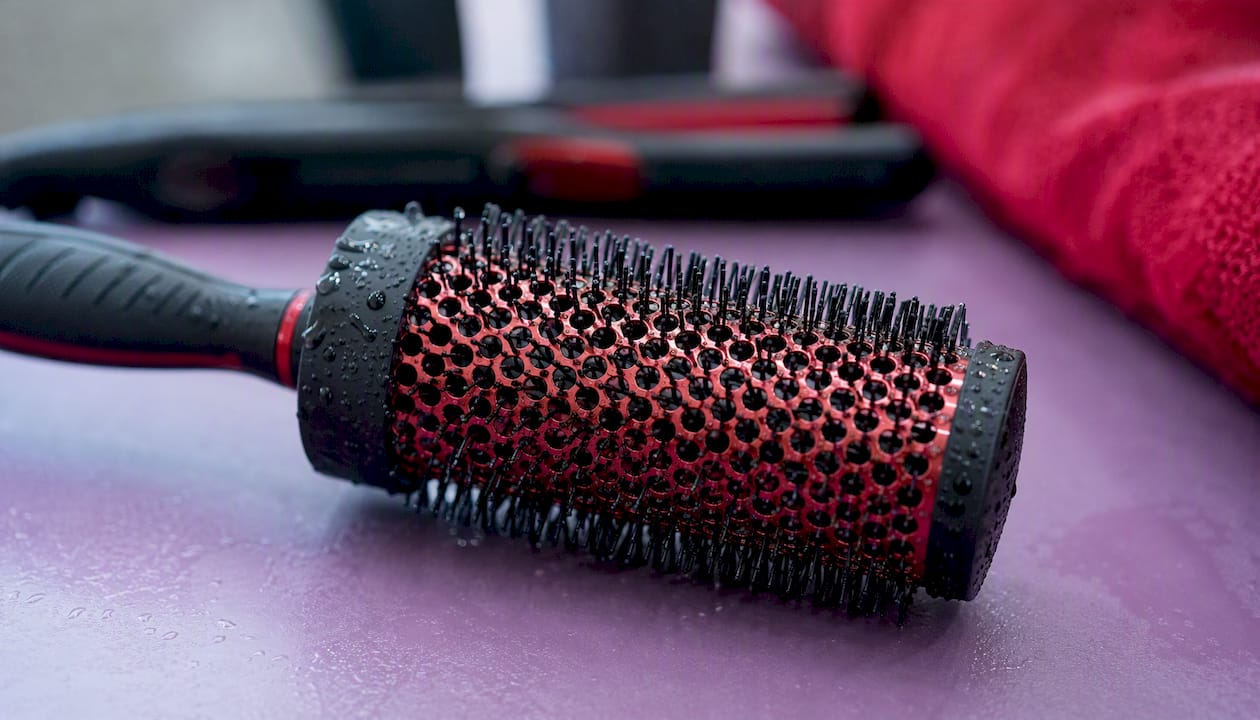
Uncoated metal barrels heat up fast, which speeds drying. The problem is uneven heat distribution. Without a ceramic or tourmaline coating, metal barrels can create hot spots that damage hair, particularly fine or colour-treated hair. Use them cautiously, and keep the dryer moving.
Vented barrels are a category of their own. The vents allow hot air to pass through the barrel rather than around it, which speeds drying significantly. The cost is reduced heat retention and less tension at the barrel surface. More on vented vs solid designs in the next section.
- Ceramic: even heat, reduced hot spots, good for most hair
- Tourmaline/ionic: frizz and static reduction, good for humidity-prone or frizz-prone hair
- Metal (uncoated): fast heat, higher damage risk, use with care
- Vented: faster drying, less tension and smoothing
Pro Tip: Colour-treated or chemically processed hair is more vulnerable to heat damage. Stick to ceramic or tourmaline barrels and keep your dryer on a medium heat setting rather than maximum.
What size round brush do you need for your hair length?
Barrel diameter is the most practical decision you will make when choosing a round brush. The diameter determines the size of the bend, the amount of root lift, and whether the result reads as curl, volume, or smooth movement.
Here is how the sizes map out:
| Barrel diameter | Hair length | Styling result |
|---|---|---|
| 10–20 mm | Very short (pixie, close crop) | Tight curl, strong root lift |
| 20–35 mm | Short to medium (bob, chin length) | Defined curl, volume at roots |
| 35–45 mm | Medium (shoulder length) | Body and bend, soft volume |
| 45–60 mm | Medium to long | Smooth wave, movement |
| 60 mm+ | Long | Sleek and straight, minimal bend |
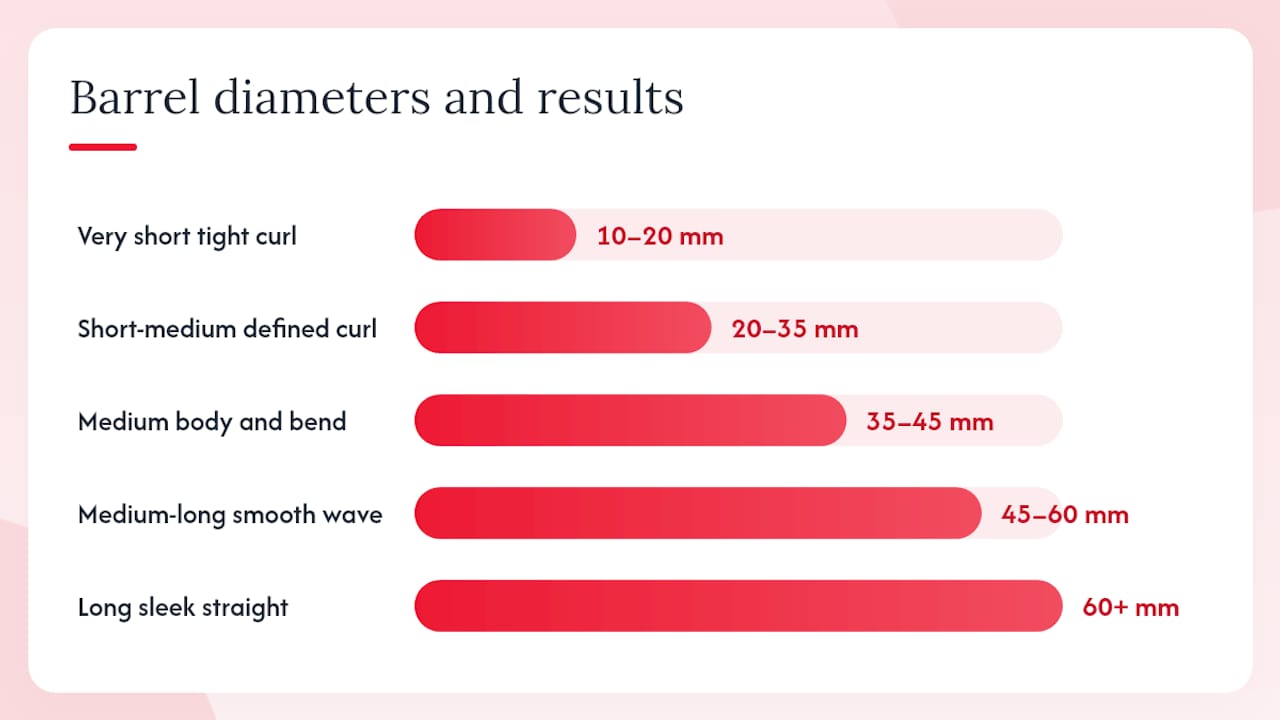
Barrel diameter maps directly to hair length and the level of bend, so matching the two is not optional if you want a predictable result. A 60 mm barrel on a bob will not create curl; it will barely wrap the hair. A 20 mm barrel on long hair will take forever and create tight ringlets most people are not after.
Quick checklist to pick your diameter:
- Short hair or tight curl: 10–25 mm
- Round brush for bangs or a bob: 20–35 mm
- Shoulder-length volume: 35–45 mm
- What size round brush for a blowout on long hair: 45–60 mm
- Smooth and straight on very long hair: 60 mm+
A 43 mm barrel (like the designME ceramic round brush at 1.7 in) sits in the medium-to-large range, which suits shoulder-to-mid-back hair for volume and smoothing blowouts.
Classic round brush vs hot-air brush: which should you use?
Hot-air brushes (sometimes called blow-dryer brushes) combine a round barrel with a built-in heating element and fan. They are genuinely useful tools. But they are not the same as a classic round brush used with a separate dryer, and the difference matters for certain styling goals.
Classic round brush + professional dryer:
- Full tension control with both hands
- You choose the heat, speed, and angle independently
- Better for long hair, precision styling, and client requests in a salon setting
- Longer-lasting shape because you control the cool-down phase precisely
- Stylists still prefer this method for the most customised blowouts
Hot-air brushes:
- One tool, one hand, faster setup
- Hair dryer brushes save time but usually provide less tension control than the classic two-tool technique
- Easier for beginners or anyone styling their own hair without a second set of hands
- Trade-off in control and finish, particularly on thick or long hair
The decision aid is simple: choose the classic method if you want salon-quality control and a finish that holds. Pick a hot-air brush if convenience and speed are the priority and you are happy with a slightly softer result. For a comparison of professional dryers that work well with round brushes, the best hair dryers for salons guide covers the key specs to look for.
How to choose the right round brush before you buy
Before you spend money on a brush that does not suit your hair, run through this checklist. Marketing language on packaging is rarely specific enough to be useful.
Checklist:
- Hair length: Match barrel diameter to length using the size table above.
- Hair density and texture: Fine hair needs boar or mixed bristles; thick or coarse hair needs nylon or mixed with stiffer pins.
- Desired result: Curl needs a small barrel; volume needs medium; smooth/straight needs large.
- Dryer wattage and heat settings: A high-heat dryer paired with an uncoated metal barrel is a damage risk. Ceramic or tourmaline is safer across most dryer types.
- Bristle composition: Check whether the brush lists boar, nylon, or mixed. “Natural bristle” alone is not enough information.
- Barrel diameter in mm or inches: Always verify the actual measurement, not just “small” or “large” labels.
- Handle comfort: A longer session with an uncomfortable handle is tiring. Hold the brush before buying if possible.
Questions worth asking:
- Will this bristle type hold tension on my hair, or will it slide?
- Is the barrel material compatible with my dryer’s heat output?
- Can I use this brush comfortably for 20–30 minutes?
On price: for regular at-home use, a mid-range mixed-bristle ceramic brush in the $30–$60 CAD range is usually sufficient. Professional tools used daily in a salon setting justify a higher investment, both for durability and for the consistency of results. For guidance on balancing cost and performance, the affordable salon essentials guide is worth a read.
How to do a salon-style blowout at home: step by step
Getting a good blowout at home is mostly about preparation and patience. The technique is not complicated, but skipping steps shows in the result.
Prep: Apply a heat protectant to towel-dried hair. Hair should be damp, not soaking. Divide hair into sections: two at the back, two at the sides, and the top. Clip everything out of the way except the section you are working on.
Step-by-step technique:
- Start at the nape of the neck with the lowest section.
- Place the round brush underneath the section, close to the roots.
- Apply gentle downward tension while directing the dryer nozzle along the hair shaft from root to tip.
- Rotate the brush as you move down, wrapping the hair around the barrel.
- At the ends, roll the brush upward toward the root to create volume or bend.
- Hold the section wrapped on the barrel and switch the dryer to cool shot. Hold for 10–15 seconds.
- Let the section cool completely on the brush before releasing it. Letting a heated section cool on the brush before dropping it is crucial to set volume and curl — skipping this step causes styles to fall flat within an hour.
- Release the section and move to the next.
- Work upward through the sections, finishing with the top.
Common mistakes:
- Sections that are too thick: the brush cannot reach the roots, and drying is uneven.
- Removing the brush while the hair is still hot: the shape has not set yet.
- Wrong barrel size: too small for the hair length means the brush gets tangled; too large means no bend.
- Dryer held too close or too long in one spot: heat damage, especially on fine hair.
Pro Tip: Keep your elbow up and your wrist relaxed. Most of the tension comes from the brush, not from pulling with your arm. Fatigue usually means the technique is working against you.
How to clean and maintain your round brush
A clean brush performs better and lasts longer. Product build-up on bristles reduces grip and smoothing, and it transfers residue back to clean hair.
- After every use, remove loose hair from the bristles. A tail comb or a dedicated brush cleaning tool works well. Slide the comb through the bristles from base to tip.
- Once a week (or more often if you use styling products), soak the brush head in warm water with a few drops of clarifying shampoo for 5–10 minutes.
- Use an old toothbrush to scrub between the bristles and around the base of the barrel.
- Rinse thoroughly with clean water.
- Shake out excess water and lay the brush bristle-side down on a clean towel to air-dry. Never store it bristle-down in a cup while wet.
Storage: Keep brushes in a dry, ventilated drawer or on an open rack. Avoid leaving them on hot tools or in a damp cabinet. Heat and moisture together degrade both the bristles and the barrel coating faster than regular use does.
When to replace:
- Bristles are frayed, bent, or missing in patches
- The barrel wobbles or feels loose
- Product build-up remains after cleaning
- The brush no longer holds tension on the hair
A note on boar bristle care: Boar bristles are more delicate than nylon. Avoid soaking them for long periods, and never use very hot water, which can loosen the bristles from the base. A quick rinse and gentle scrub is enough for weekly maintenance.
Key takeaways
Matching barrel diameter to hair length is the single most important decision when choosing a round brush for a salon-style blowout.
| Point | Details |
|---|---|
| Match diameter to length | Use 10–35 mm for short hair, 35–45 mm for medium, and 45–60+ mm for long hair. |
| Choose bristles for texture | Boar for shine on fine hair, nylon for grip on thick hair, mixed for most blowout styles. |
| Barrel material affects finish | Ceramic and tourmaline distribute heat evenly and reduce frizz; uncoated metal risks hot spots. |
| Cool the section before releasing | Holding each section on the brush until it cools is what locks in volume and shape. |
| Salonbrandz for Canadian buyers | Salonbrandz stocks professional round brushes with full specs, ships across Canada, and offers pickup in Scarborough. |
The part most people skip — and why it matters most
Most round brush guides spend their energy on bristle comparisons and barrel materials. Those details matter, but they are not what separates a blowout that lasts until the next morning from one that falls flat by lunch.
The setting phase is. Wrapping a heated section around the barrel, switching to cool shot, and holding it there for a full 10–15 seconds before releasing is the step that actually locks in the shape. The heat opens the hair’s cuticle and moulds it to the barrel; the cool air closes the cuticle around that shape. Skip the cool shot, or release the section while it is still warm, and the hair simply returns to its natural pattern.
Professionals carry multiple barrel diameters not because they are perfectionists about equipment, but because the right diameter for a fringe is genuinely different from the right diameter for the lengths. A 20 mm barrel on a bang creates a clean, controlled bend. The same barrel on mid-back hair is a frustrating exercise in tangling. The tool has to match the task.
For home users, the practical takeaway is this: invest in one good mixed-bristle ceramic brush in a diameter that suits your most common styling zone, learn the cool-shot step, and you will get more out of that single brush than out of a drawer full of the wrong ones.
Professional round brushes at Salonbrandz, shipped across Canada
Salonbrandz stocks professional-grade round brushes with full specification listings, including barrel diameter in millimetres and inches, and bristle composition, so you know exactly what you are buying before it arrives.
The designME Ceramic Round Brush is a practical example: a 1.7 in (43 mm) ceramic barrel that sits in the medium-to-large range, suited to shoulder-length and longer hair for volume and smoothing blowouts. It is the kind of brush that works for both professional salon use and regular at-home styling.
Salonbrandz ships across Canada and offers in-store pickup in Scarborough, near Toronto. Pro-access registration is available for salon owners and stylists who want access to professional pricing. Browse the full professional salon supplies selection, check barrel diameters and bristle specs on each product page, and order with confidence knowing Canadian shipping and returns apply.
FAQ
What are the different types of round brushes?
Round brushes are categorised by bristle type (boar, nylon, or mixed) and barrel material (ceramic, tourmaline, metal, or vented). The combination of bristle and barrel determines grip, heat behaviour, and the finish you get.
Does the type of round brush matter for a blowout?
Yes. Bristle type affects tension and smoothing, barrel material affects heat distribution and frizz control, and barrel diameter determines the size of the bend. Using the wrong combination for your hair type or length produces inconsistent results.
What size round brush should you use for a blowout?
Match the barrel diameter to your hair length: 10–35 mm for short hair, 35–45 mm for medium/shoulder-length hair, and 45–60+ mm for long hair. Larger barrels create smoother, straighter results; smaller barrels create more curl and lift.
What are those round brushes with the circular barrel called?
They are simply called round brushes or radial brushes. The cylindrical barrel is the defining feature, and the name refers to the circular cross-section that allows hair to wrap around it during blow-drying.
Where can you buy professional round brushes in Canada?
Professional round brushes are available through salon supply distributors and pro beauty e-tailers that ship across Canada. Salonbrandz carries professional round brushes with full spec listings and offers both national shipping and in-store pickup in Scarborough, near Toronto.


