


Trimmer blade types: what to pick and why
Stainless steel, titanium, and ceramic are the three primary trimmer blade material families, and the single rule that governs every purchase is this: match the material and blade style to how often you cut and what you’re cutting. Professional barbers confirm that no single material wins across all tasks — the right blade depends on workload, hair texture, and heat tolerance.
Quick picks:
- Casual at-home use: Stainless steel straight blade — affordable, easy to maintain, widely available across Canada.
- High-volume professional use: Titanium or titanium-nitride-coated taper blade — superior edge retention and heat resistance for back-to-back clients.
- Precision detailing or sensitive skin: Ceramic blade — stays cooler than metal, gentler on skin, best paired with a moderate-power motor.
Key takeaways
Matching blade material to use frequency and task is the single decision that separates a blade that performs from one that frustrates.
| Point | Details |
|---|---|
| Material drives heat and edge life | Titanium and TiN-coated steel suit high-volume use; ceramic suits sensitive skin and finishing. |
| Blade style determines the task | T-blades for outlining, taper/fade blades for blending, straight blades for maintenance and bulk work. |
| Maintenance extends blade life | Oil after every use; deep clean weekly for pros to maintain sharpness and reduce skin irritation risk. |
| Canadian climate demands corrosion resistance | Titanium or TiN-coated blades handle humidity swings and cold storage better than uncoated steel. |
| Salonbrandz for Canadian buyers | Salonbrandz ships replacement blades, lubricants, and professional supplies across Canada, with in-store pickup in Scarborough. |
Table of Contents
- What are the main trimmer blade types by material?
- Blade styles and designs: which shape fits your task?
- How blade width and tooth spacing affect your cut
- What coatings and surface treatments actually do
- Blade adjustability and compatibility: what to check before you buy
- Heat, motor power, and why they work together
- How to clean, oil, and know when to replace your blades
- How to choose the right blade for your specific goal
- What Canadian barbers and salon pros actually choose
- Safety considerations when using different blade types
- How Canadian climate affects blade durability
- The case for buying pro-grade blades even at home
- Salonbrandz has the blades, parts, and supplies you need
- Sources
- FAQ
What are the main trimmer blade types by material?
The material your blade is made from determines how hot it runs, how long it stays sharp, and how much maintenance it demands. Here’s how the three primary families compare, plus the hybrids and coatings that sit between them.
Stainless steel
The default for most consumer and mid-range professional trimmers. Stainless steel is easy to sharpen, widely available in Canada, and inexpensive to replace. The trade-off is heat: steel conducts heat readily, so blades warm up faster under continuous use. For home users trimming a beard twice a week, that’s a non-issue. For a barber running six clients back-to-back, it becomes a real problem.
Pros: Low cost, easy to sharpen, replacement blades available at most Canadian beauty supply retailers. Cons: Heats up faster than alternatives; edge dulls sooner under heavy use.
Titanium
Titanium blades are harder than stainless steel and hold their edge noticeably longer. They also resist corrosion better, which matters in a humid salon environment. The downside is cost: titanium blades run higher than steel, and sharpening requires more specialised equipment. Professional barbers favour titanium for high-volume work precisely because of heat management and edge life.
Pros: Excellent edge retention, corrosion-resistant, handles continuous use well. Cons: Higher upfront cost; sharpening is more involved.
Ceramic
Ceramic blades stay significantly cooler than metal blades during operation, which makes them the preferred choice for sensitive skin and finishing work. They’re also hypoallergenic. The catch is brittleness: drop a ceramic blade on a hard floor and it may chip or crack. Replacement costs are higher, and availability in Canada can be more limited than steel or titanium.
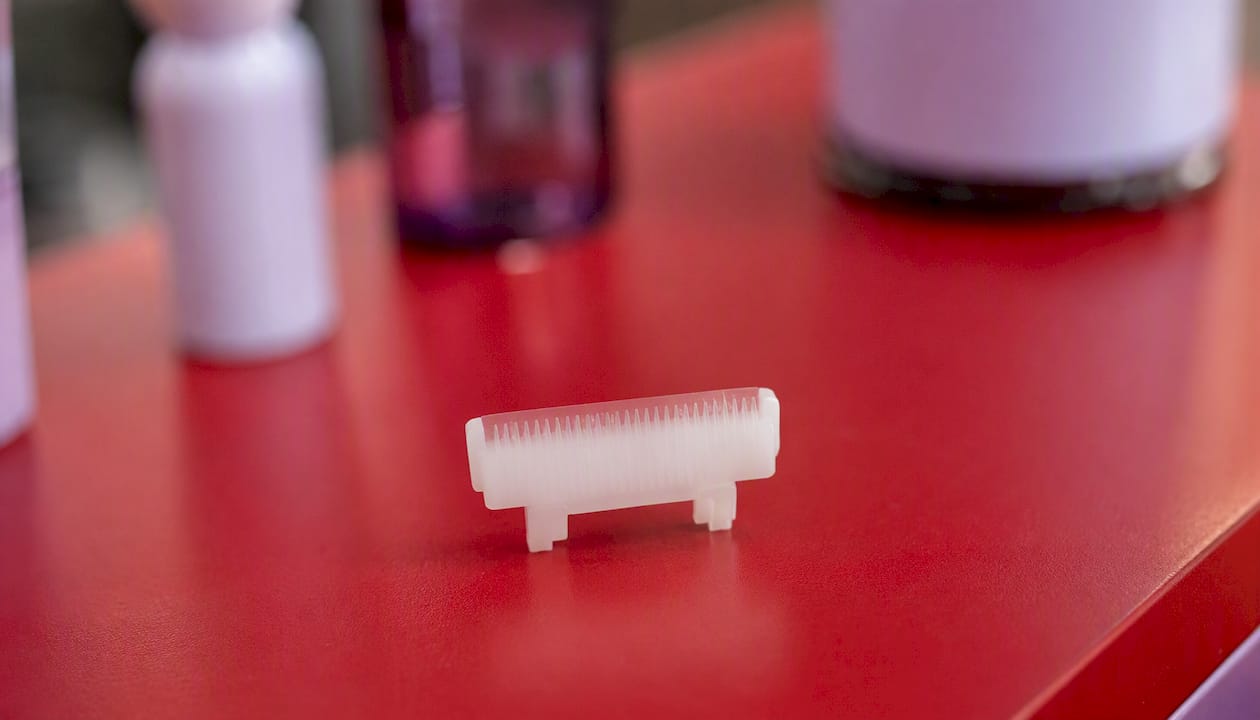
Pros: Runs cool, hypoallergenic, ideal for sensitive skin and detail work. Cons: Brittle, chips on impact, more expensive to replace, less widely stocked.
Hybrids and coatings
Many blades combine a steel base with a surface treatment to get the best of multiple materials. Common options include:
- Titanium nitride (TiN) coating: A gold-coloured hard coating applied over steel. Reduces friction, extends edge life, and adds corrosion resistance without the full cost of solid titanium.
- Diamond-like carbon (DLC) coating: Extremely hard, very low friction. Used on premium blades to reduce heat and extend sharpness.
- Ceramic-tipped blades: A steel cutter paired with a ceramic stationary blade. Delivers the cool-running benefit of ceramic at a lower price than full ceramic.
- Chrome plating: A basic corrosion-resistant finish common on entry-level blades. Extends life modestly but wears off faster than TiN or DLC.
Blade styles and designs: which shape fits your task?
Material gets you halfway there. The blade’s shape and design determine whether you’re outlining a neckline, blending a fade, or removing bulk from thick hair. Barbers identify three core blade styles — straight/U, T-blade, and foil — with several professional sub-types built for specific tasks.
- Straight (U) blade: Sits flush with the trimmer housing. Covers more surface area per pass, making it faster for maintenance trims and bulk removal. Best for: general beard shaping, full-head maintenance, and home use.
- T-blade: Extends past the housing on both sides, giving the operator a clear sightline to the cutting edge. T-blades are optimised for precision edge work — outlining, necklines, and crisp part lines. Professional T-blade widths are generally wider than consumer versions, which have a narrower cutting surface.
- Foil head: A thin perforated metal screen over a reciprocating cutter. Captures and cuts hair very close to the skin. Best for: finishing a shave, stubble maintenance, and sensitive areas.
- Taper blade: A slightly angled or graduated tooth pattern that blends lengths smoothly. Best for: fade transitions and blending.
- Fade blade: A finer-toothed version of the taper blade, designed for tight, close fades. Best for: high-skin fades and precision blending near the hairline.
- Wedge blade: A thicker, more aggressive tooth profile for coarse or dense hair. Best for: bulk removal on thick or curly hair textures.
- Deep-tooth blade: Wide spacing between teeth allows more hair to enter the blade per pass. Best for: coarse, thick, or curly hair; faster cutting on dense textures.
- Shallow-tooth blade: Narrow tooth spacing for finer, more controlled cuts. Best for: fine hair, detail work, and close finishing.
Professional clipper blades like taper, fade, wedge, and deep-tooth each solve a specific barbering problem. Stocking more than one style is standard practice in a professional kit.
How blade width and tooth spacing affect your cut
Blade geometry is where a lot of buyers get caught off guard. Two blades made of identical material can perform very differently depending on their width and tooth configuration.
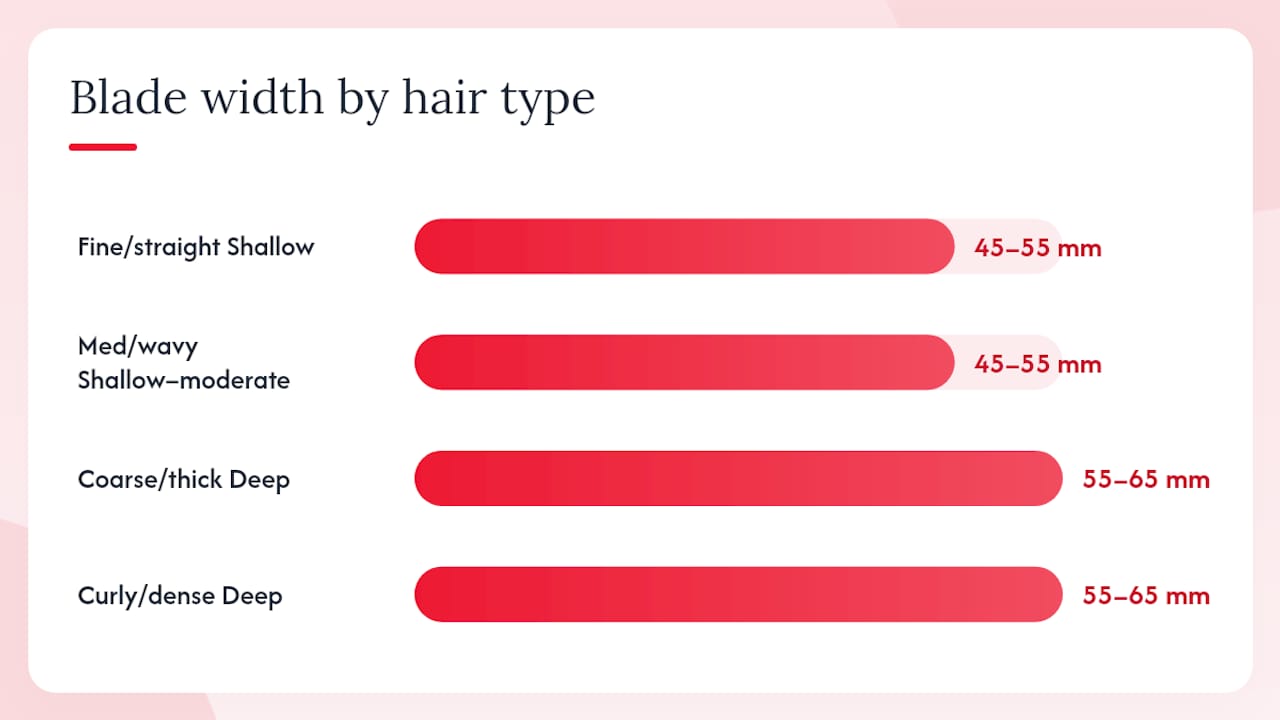
Blade width determines how much hair the blade captures per pass. Wider blades are faster but harder to manoeuvre around curves. Narrower blades give more control in tight areas. As noted above, professional T-blades typically measure 55–65 mm wide; consumer straight blades usually fall in the 45–55 mm range.
Tooth depth and spacing govern how the blade interacts with different hair textures:
- Shallow tooth (narrow spacing): Cuts fine or straight hair cleanly; can snag or pull on coarse or curly hair if the blade isn’t sharp.
- Deep tooth (wide spacing): Allows thick or curly hair to feed through without pulling; removes more material per pass but leaves a less refined finish.
A practical mapping:
| Hair type | Recommended tooth depth | Recommended blade width |
|---|---|---|
| Fine, straight | Shallow | 45–55 mm |
| Medium, wavy | Shallow–moderate | 45–55 mm |
| Coarse, thick | Deep | 55–65 mm |
| Curly, dense | Deep | 55–65 mm |
On the topic of blade numbering: higher blade numbers correspond to shorter cuts — a #7 blade leaves noticeably less length than a #5. This numbering convention applies across most professional clipper systems and is worth confirming against your specific brand’s chart before buying.
One practical note on clogging: deep-tooth blades accumulate hair debris faster than shallow-tooth blades. If you’re working with dense or curly hair, plan to brush out the blade more frequently mid-session.
What coatings and surface treatments actually do
A coating doesn’t change the blade’s base material, but it can meaningfully extend its useful life and change how it feels in use.
- Chrome plating: The most common entry-level treatment. Adds basic corrosion resistance and a polished finish. Wears off within months under heavy use.
- Titanium nitride (TiN): The gold-coloured coating you see on premium consumer and professional blades. Harder than chrome, significantly lower friction, and extends edge life. A TiN-coated steel blade often outlasts an uncoated steel blade by a wide margin in daily use.
- Diamond-like carbon (DLC): The hardest common coating available on hair tools. Near-zero friction, excellent heat reduction, and very long edge life. Found on top-tier professional blades.
- Ceramic-tipped finish: Applies ceramic material to the stationary blade only, keeping the cutting surface cool while using a steel cutter for durability.
Realistic life expectancy: An uncoated stainless steel blade used professionally may need sharpening or replacement every 4–6 weeks. A TiN-coated blade under the same conditions can extend that interval considerably. DLC-coated blades push further still, though the upfront cost reflects that.
Pro Tip: A worn coating shows up as a dull, scratched, or discoloured surface on the blade face. Functionally, you’ll notice increased heat during use, more pulling on hair, and a rougher feel on skin. If the blade looks dull and feels hot faster than it used to, the coating is gone — sharpening alone won’t restore it.
Blade adjustability and compatibility: what to check before you buy
Buying a replacement blade that doesn’t fit your trimmer is one of the most common and avoidable mistakes in this category. Adjustability and compatibility are separate issues, and both matter.
Adjustability mechanisms:
- Built-in lever adjuster: A side-mounted lever that shifts the cutter blade relative to the stationary blade, changing cutting length without swapping blades. Common on clippers; less common on detail trimmers.
- Zero-gap adjustment: Manually aligning the cutter and stationary blade so the teeth are flush, producing the closest possible cut. Used by barbers for skin-close outlines. Requires care — misalignment can cause nicks.
- Detachable blade systems: The entire blade assembly snaps off and a different blade snaps on. Offers the most versatility but requires confirmed compatibility between the blade and the trimmer body.
Compatibility checklist before buying replacement blades:
- Locate the model number on your trimmer (usually on the body or in the manual).
- Search the manufacturer’s replacement blade list using that exact model number.
- Confirm the mounting system matches: snap-on, screw-mount, and magnetic systems are not interchangeable.
- Check that guard attachments (if you use them) are compatible with the replacement blade’s tooth profile.
- For Canadian buyers, Salonbrandz stocks replacement blades and can help confirm compatibility — browse professional clipper options or contact the team directly for model-specific guidance.
Heat, motor power, and why they work together
A blade doesn’t operate in isolation. Its performance depends heavily on the motor driving it, and mismatching the two is a fast route to overheating, premature dulling, or a poor-quality cut.
The basic principle: higher-RPM motors generate more friction at the blade. A blade that handles that friction well — through material hardness, a low-friction coating, or both — stays sharper longer and runs cooler. A blade that can’t manage the heat dulls faster and can irritate skin.
Professional barbers note that a motor running around 5,000 RPM or higher, paired with a sharp, well-maintained blade, produces the best trimming results. Even a premium ceramic or titanium blade underperforms when paired with a weak motor or run on a poorly maintained device.
Heat builds from three compounding factors: friction between the cutter and stationary blade, RPM (higher speed means more friction cycles per second), and load (denser or wetter hair creates more resistance). Material and coating directly affect how much of that heat transfers to the skin.
Pro Tip: If your trimmer runs hot within the first few minutes of use, the problem is usually one of three things: the blade needs oiling, the blade is dull, or the blade material isn’t suited to that motor’s output. Oil first, then assess sharpness. If heat persists, consider a TiN-coated or ceramic-tipped blade for that device.
How to clean, oil, and know when to replace your blades
Cleaning and oiling after every use, with a deeper weekly clean for professional users, is the single most effective thing you can do to extend blade life and reduce skin irritation risk. The routine is straightforward once it’s a habit.
Daily (after every use):
- Power off and unplug the trimmer.
- Brush loose hair from the blade using the cleaning brush that came with the device.
- If the blade is detachable and rated for rinsing, rinse under warm water and shake dry.
- Apply 2–3 drops of clipper oil along the teeth of the blade.
- Run the trimmer for 10–15 seconds to distribute the oil, then wipe off the excess.
Weekly (professional use) or monthly (home use):
- Remove the blade assembly and clean the housing cavity with a dry brush.
- Inspect the blade for chips, uneven wear, or coating deterioration.
- Check and tighten any blade screws if the design allows.
- Apply a spray sterilant (such as Andis Cool Care or equivalent) and allow to dry before oiling.
Sharpening vs. replacement:
Blades can typically be sharpened 2–3 times before the tooth geometry degrades enough to warrant replacement. A blade that pulls hair, leaves uneven lines, or runs noticeably hotter than usual despite fresh oil is telling you it needs attention. For Canadian buyers, blade sharpening services are available through professional beauty supply shops; Salonbrandz can point you toward local options or ship replacement blades directly.
What to use: Clipper oil (mineral-based, purpose-formulated) is the standard. Avoid WD-40 and general-purpose lubricants — they attract debris and can degrade blade coatings.
How to choose the right blade for your specific goal
Start with the task, then layer in frequency and maintenance tolerance. That order matters.
Decision flow:
- Detailing, outlining, or edging? Choose a T-blade. Material: titanium or TiN-coated steel for pros; stainless steel for home use.
- Bulk removal or full-head cutting? Choose a straight/U blade or taper blade with deep-tooth spacing. Material: stainless steel for home; titanium or coated steel for salon volume.
- Fades and blending? Choose a taper or fade blade. Material: titanium or high-quality coated steel.
- Sensitive skin or finishing work? Choose a ceramic or ceramic-tipped blade with shallow-tooth spacing.
- Body grooming? Choose a rounded-tooth blade (many body groomers use a modified U-blade) to reduce skin contact risk.
Understanding whether you need a clipper or a trimmer first will also narrow your blade options significantly — clippers use larger blades for bulk work, trimmers use smaller blades for detail and finishing.
Red flags to avoid:
- Ceramic blades for continuous heavy-duty professional use — they chip under sustained load.
- Detachable blades from a different brand’s system — mounting tolerances vary and a loose blade is a safety hazard.
- Buying replacement blades by photo alone — always confirm by model number.
Quick purchase checklist: task confirmed → blade style selected → material matched to frequency → compatibility verified by model number → maintenance supplies (oil, brush, sterilant) in hand.
What Canadian barbers and salon pros actually choose
Canadian salons prioritise edge retention and heat management above all else. For back-to-back clients, titanium or TiN-coated steel blades are the working standard. Ceramic blades appear in finishing kits and for clients with sensitive skin or scalp conditions, not as the primary cutting blade.
Professional barbers consistently recommend matching blade material to workload: titanium or specialised ceramic for high-volume salon services because of heat management and edge life; stainless steel is the pragmatic choice for casual users who trim at home a few times a week. A high-RPM motor paired with a sharp, well-maintained blade produces the best results — even the best blade underperforms with a weak motor or poor maintenance.
Salonbrandz stocks professional and consumer blades, lubricants, and replacement parts for Canadian buyers, with shipping across Canada and in-store pickup in Scarborough. For pros building or restocking a kit, the BaBylissPRO COREFX Clipper and Trimmer Set is one example of a professional bundle that demonstrates blade interchangeability and matched performance across a two-piece system.
What experienced barbers stock:
- A primary taper or fade blade (titanium or TiN-coated) for the bulk of client work.
- A T-blade trimmer for outlines and necklines.
- A ceramic or ceramic-tipped blade for sensitive-skin clients and finishing passes.
- Clipper oil, a spray sterilant, and a spare set of replacement blades to avoid downtime.
Safety considerations when using different blade types
Blade type affects not just cut quality but also the risk of nicks, skin irritation, and cross-contamination. A few points that don’t get enough attention:
Zero-gap blades produce the closest cut but carry the highest risk of skin contact. They’re a professional technique — if you’re not experienced with zero-gap alignment, leave the blade at the manufacturer’s default setting.
Ceramic blades are brittle. A chipped ceramic blade has a micro-serrated edge that can catch and tear skin. Inspect ceramic blades before every use and replace at the first sign of chipping.
Foil heads are the safest option for skin-close finishing on sensitive areas, because the perforated screen keeps the cutter away from direct skin contact. They’re also the most prone to clogging with longer hair — use them only on short stubble or post-clipper finishing.
Sterilisation between clients is non-negotiable in a professional setting. Spray sterilants (applied after brushing and before oiling) are the standard. Blades that can’t be removed for cleaning are a hygiene liability in a salon context.
Heat burns are a real risk with metal blades under continuous use. Touch the blade to your wrist before applying it to a client’s skin. If it’s uncomfortably warm, stop, oil, and let it cool for 30 seconds.
How Canadian climate affects blade durability
Canada’s climate creates specific durability challenges that don’t come up in most blade guides written for warmer or more temperate markets.
Humidity swings between heated indoor air in winter and humid summer conditions accelerate corrosion on uncoated or chrome-plated steel blades. Stainless steel handles this better than carbon steel, but titanium and TiN-coated blades are the most resistant to the oxidation that comes with repeated humidity changes.
Cold storage is a less obvious issue. Blades stored in an unheated vehicle or garage during a Canadian winter can develop condensation when brought into a warm salon. That moisture, sitting on an unprotected blade, starts corrosion quickly. Store blades in a dry, room-temperature case and wipe them down if they’ve been exposed to cold.
Dry winter air (from forced-air heating) can cause blade oils to evaporate faster than in humid climates. Blades used in Canadian salons during winter may need re-oiling more frequently than the standard post-use interval.
For Canadian buyers, titanium or TiN-coated blades offer the best durability across seasonal extremes. Ceramic blades perform well indoors but are more vulnerable to the thermal shock of moving between cold and warm environments. Stainless steel is serviceable year-round with consistent oiling, but requires more vigilance in humid summer months.
The case for buying pro-grade blades even at home
Pro-grade blades aren’t just for barbers. If you trim more than twice a week, the cost difference between a consumer stainless steel blade and a TiN-coated or titanium blade pays back quickly in fewer replacements and less skin irritation. The maintenance commitment is identical — oil after every use, clean weekly — so the only real variable is upfront cost.
Buy consumer-grade when you trim occasionally and want simplicity. Buy professional-grade when frequency, hair texture, or skin sensitivity makes the performance gap matter. For most Canadians who’ve moved past the basic trimmer stage, a mid-range TiN-coated blade is the most sensible starting point.
Salonbrandz has the blades, parts, and supplies you need
Salonbrandz stocks professional and consumer trimmer blades, replacement parts, clipper oils, and sterilants, with delivery across Canada and in-store pickup in Scarborough near Toronto. Whether you’re a barber restocking a full kit or a home user replacing a single blade, the range covers stainless steel, titanium, and ceramic options from professional brands.
For pros, the ability to source replacement blades locally without waiting on international shipping is a real operational advantage. Salonbrandz carries compatible replacement parts for major professional trimmer brands and can help confirm compatibility by model number before you order. Browse the full range of professional salon supplies online, or stop in at the Scarborough location to see the inventory in person and get guidance on what fits your setup.
Sources
- Barbers break down beard trimmer blade types
- T-Blade vs Regular Trimmer: What’s the Difference? | Bestbomg
- Types of Professional Clipper Blades & Their Uses – Expert Guide
FAQ
Which trimmer blade type is best overall?
There’s no single best blade — it depends on the task. For most home users, a stainless steel or TiN-coated straight blade covers general beard and hair maintenance well. For professional barbers, titanium or TiN-coated taper blades handle back-to-back clients with better heat management and edge retention.
What is the difference between a T-blade and a U-blade?
A T-blade extends past the trimmer housing on both sides, giving a clear sightline for precision outlining and edging. A U-blade (straight blade) sits flush with the housing and covers more surface area per pass, making it faster for general maintenance and bulk trimming.
Does a #5 or #7 blade cut shorter?
A #7 blade cuts shorter than a #5. In professional clipper systems, higher blade numbers correspond to shorter cutting lengths — the numbering is counterintuitive but consistent across most major brands.
How often should trimmer blades be replaced?
With proper cleaning and oiling after every use, most blades can be sharpened 2–3 times before replacement is needed. A blade that pulls hair, runs hotter than usual despite fresh oil, or leaves uneven lines is due for sharpening or replacement. Professional barbers on heavy rotation typically replace blades more frequently than home users.
Where can Canadian buyers find replacement trimmer blades?
Salonbrandz stocks replacement blades and professional supplies with shipping across Canada and in-store pickup in Scarborough. Always confirm compatibility by model number before ordering.


